Conner Laugh · Bub's Pressure Washing
Veteran-owned, licensed & insured · Published July 23, 2026
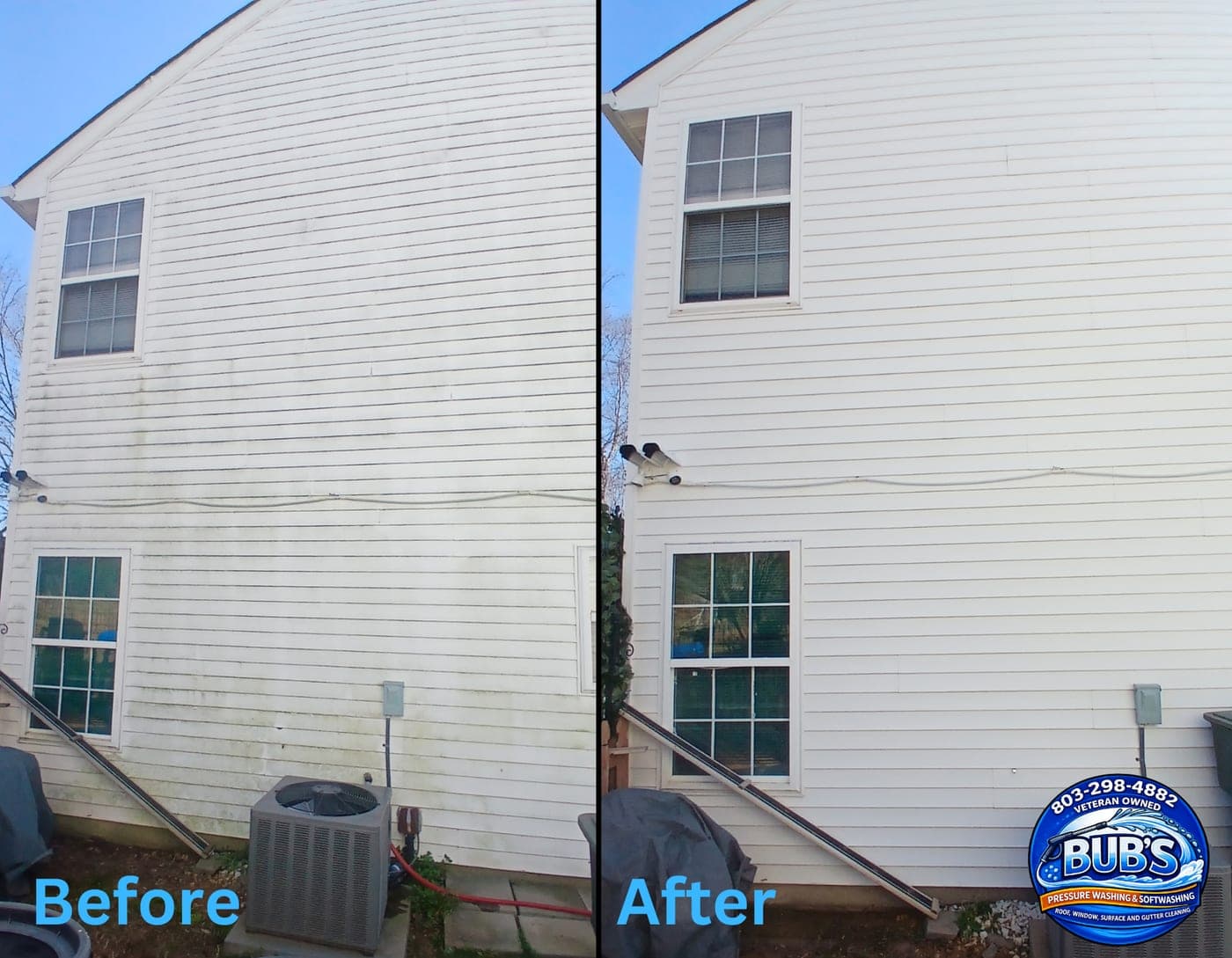
Walk around the side of your house you never use, and there it is. A green haze low on the wall, heavier near the ground, climbing a little higher every year. Most of the calls we take about siding start exactly there, on the side the owner rarely sees, and the first question is always the same. What is this stuff?
What the green stuff on your siding actually is
The green film on your siding is algae, a living growth feeding on the thin layer of dust, pollen, and moisture that sits on every exterior wall. Most homeowners call it mold, and the treatment is the same either way, but true mold and mildew on siding show up gray or black. If it is green, it is almost always algae. It is not dirt, which is why hosing it off never works for long, and it is not the indoor mold people worry about, which is why it is not an emergency. It is a growth on the surface of the siding, and it spreads wherever the wall stays damp enough to support it.
That dampness is the whole story. Algae does not care what your house is made of. Vinyl, painted wood, brick, Hardie board, it will take any of them, as long as the surface holds moisture for enough hours a day. Shade is what makes that happen. A wall that gets morning sun dries fast and stays clean for years. The wall behind the shrubs, under the oaks, facing north, stays wet till lunch and goes green first.
On walk-throughs, people sometimes apologize for it, like the green means they let the place go. It does not. It means they own a house in South Carolina with at least one shaded wall. That covers most of the Midlands.
Why siding turns green so fast in South Carolina
Algae needs warmth, moisture, and something to eat. The Midlands delivers all three most of the year. Long humid summers keep the air heavy, warm nights keep dew on the walls into mid-morning, and the pollen that coats everything each spring is a food source sitting right on the siding. A house here simply grows green faster than the same house would in a dry climate, and some spots have it worse than others: the oak-shaded lots in Forest Acres, and the low river air that hangs over Cayce and West Columbia.
That is also why the green keeps returning no matter what you scrub it with. You can take the color off the surface, but the conditions that grew it have not changed, and whatever film survives down in the texture of the siding starts rebuilding the day you finish.
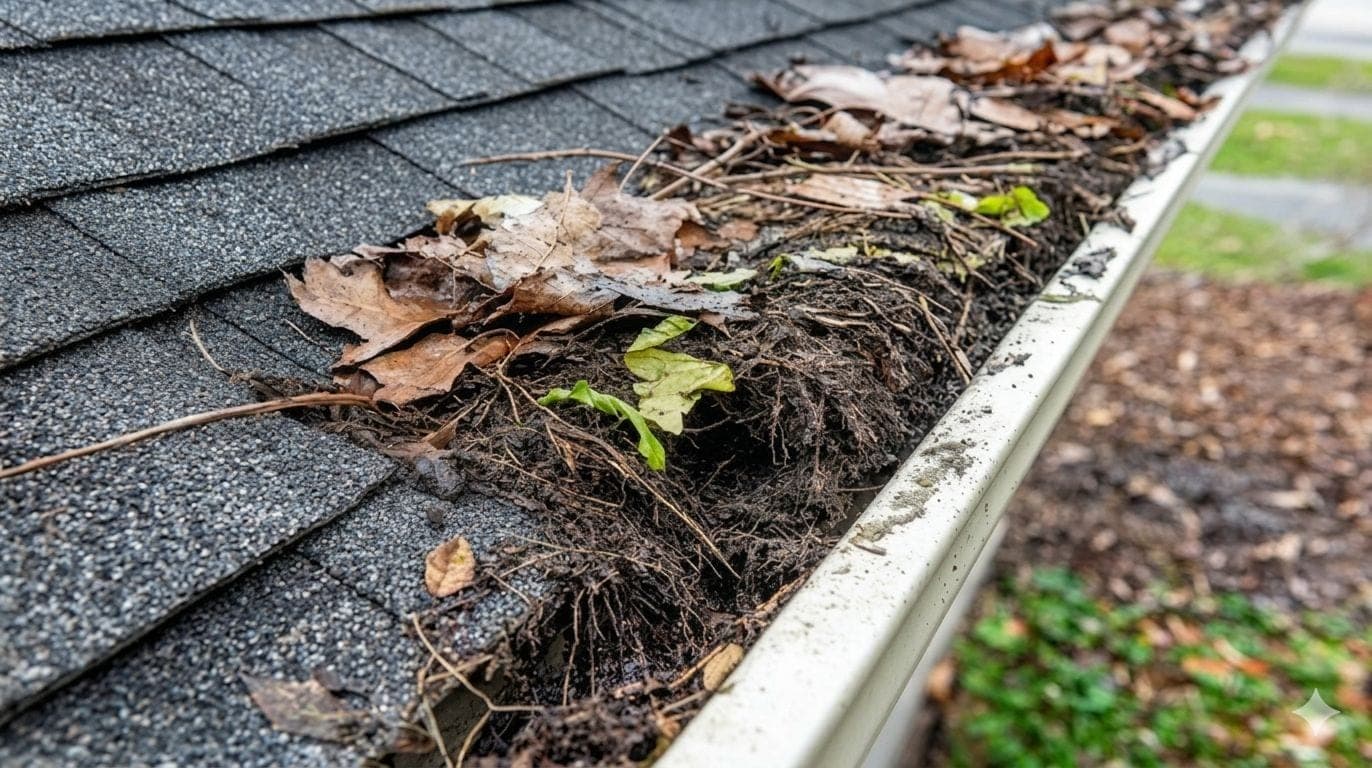
One accelerant worth checking is your gutters. A clogged run that sheets water down the wall grows a green stripe right under the overflow line, and a wash will not keep that spot clean for long until the gutter is fixed. Our storm season gutter guide covers what to look for.
What the color on your wall is telling you
Not every stain on siding is algae, and the fixes are different. A quick read of the color saves a lot of wasted scrubbing.
| What you see | What it usually is | The right move |
|---|---|---|
| Green film, worst on the shady side | Algae growing on the surface moisture | A soft wash that kills the film down in the texture |
| Black streaks running down a roof | A roof algae, its own subject entirely | See our guide to black streaks on the roof |
| Gray-brown buildup near the ground | Splash-up grime and dust bound to the wall | Comes off in the same wash, no extra step |
| Orange-tan staining low on walls or concrete | Red clay splash, an iron stain, not a growth | Its own treatment, covered in our red clay guide |
| Chalky white dust that rubs off on your hand | Oxidation, the finish itself breaking down | A wash will not reverse it, and we say so up front |
That last row matters. If your siding is chalking, a wash still clears the growth and grime, but the dullness in the finish is age, not dirt. We point that difference out during the walk-around, so the after matches what you pictured.
Rather leave it to a pro?
We will read it in person and tell you exactly what it needs. Veteran-owned, free estimate, no trip fee.
GET MY FREE ESTIMATEWhy scrubbing and pressure washing both fail
Homeowners usually try two things before calling anyone, and both fail the same way for different reasons.
Hand scrubbing with a brush and bleach water takes the color off a reachable patch and leaves everything above shoulder height untouched. The wall ends up two-tone, the flower bed below takes the runoff, and the film in the siding texture survives to rebuild.
The pressure washer fails more expensively. High pressure aimed at siding cracks aged vinyl, lifts paint that was holding on fine, and drives water up behind the laps where it has no business being. And after all that risk, it still only strips the surface growth. The wall looks clean for a few weeks, then the survivors regrow into the same green haze. We get called to a lot of walls that were blasted clean the summer before.
How to remove green algae from siding: a soft wash
The fix is chemistry doing the work while the pressure stays low. A soft wash puts a cleaning solution on the wall at low pressure, about like heavy rain, with a soap that helps it cling instead of sheeting straight off. Then it sits. The dwell is where the job is actually won. The solution works down into the texture where the film lives and kills it there, so what rinses off the wall is growth that has already been killed.
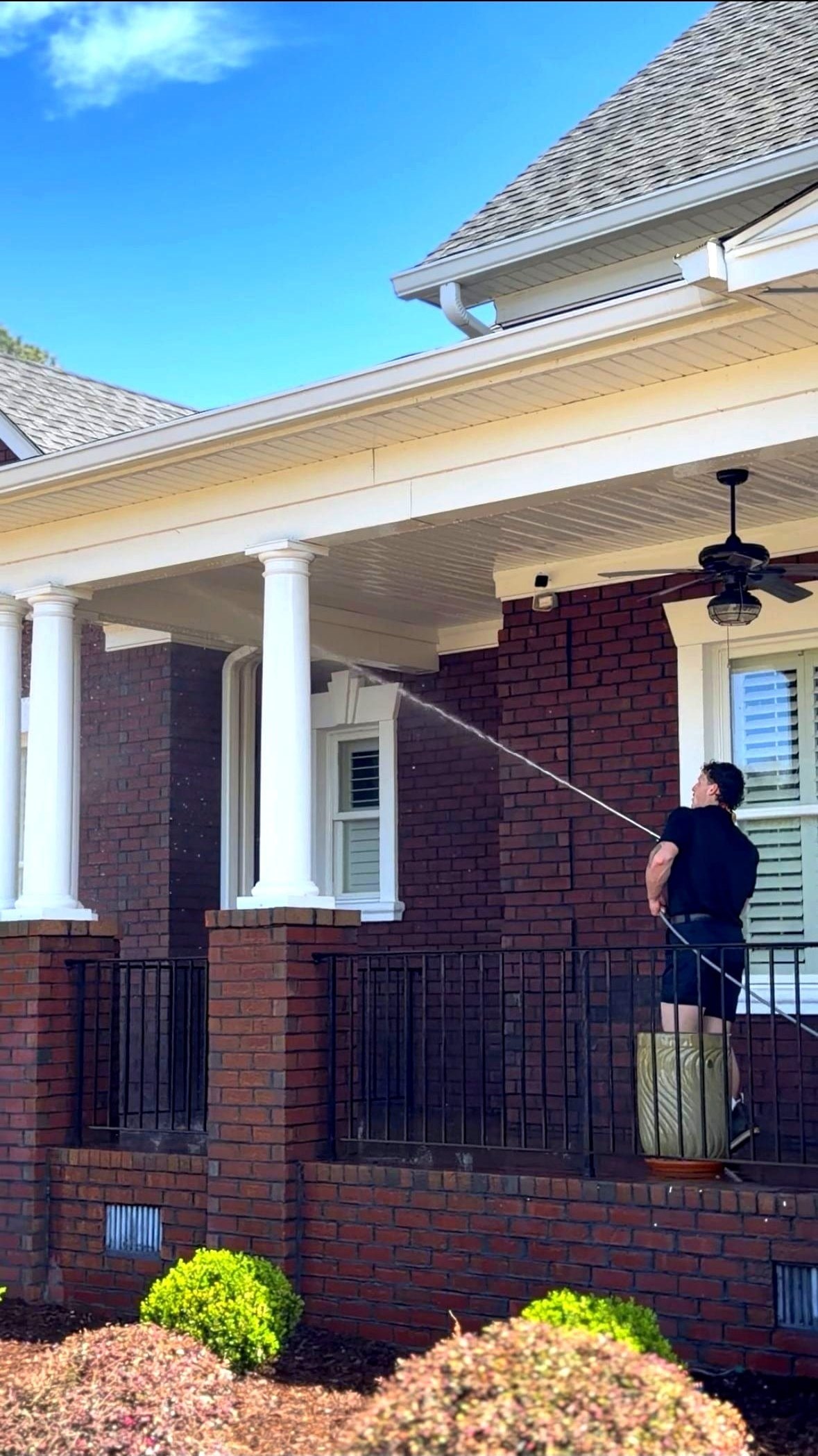
Because the pressure stays low, the process is gentle on the things a blast ruins. Aged paint, older caulk lines, window seals, light fixtures. On older painted walls we test a small, low spot first and let the finish tell us how careful to be. The house gets rinsed top to bottom, the beds get soaked before and after, and the green side of the house finally matches the rest. That full routine is what our house washing visit is built around.
The green is not gone forever, because shade and humidity are not going anywhere. What a real kill buys you is time, a wall that stays clean far longer than any surface rinse can manage, because regrowth is rebuilding from zero.
When to hand it off
If the green is past the reach of a garden hose, on a second story, or sitting on siding old enough that you are nervous about the paint, it is a professional job. It costs you one walk-around to find out exactly what your wall needs. We service the whole Midlands, from house washing in Columbia to the shaded brick streets of Forest Acres, and the estimate happens in person, at your house, free. If you are weighing the method itself, our plain-English breakdown of soft washing versus pressure washing covers when each one belongs. And when you are ready for the shady side to match the front, grab a free quote and we will come look.