Conner Laugh · Bub's Pressure Washing
Veteran-owned, licensed & insured · Published June 5, 2026
You looked up at your roof and saw dark streaks running down the shingles. They look like dirt, or like a stain bleeding off the ridge. Out here in the Midlands, that is almost never dirt. It is a living algae, and it grows fast in our heat and humidity. The good news is it cleans up. The bad news is most folks reach for the wrong tool and take years off the roof doing it.
Here is the plain version. Those streaks are algae feeding on your shingles. A pressure washer will blast it off and wreck the roof at the same time. The right move is a soft wash, which is low pressure and a cleaning solution that kills the algae at the root. This article tells you what that black stuff really is, why your roof greens up faster than the same house would in a drier state, and how a pro cleans it without doing damage.
What those black streaks actually are
The streaks are a roof algae called gloeocapsa magma. It is a living organism, not grime, and it feeds on the limestone filler baked into asphalt shingles. It blows in on the wind, lands on your roof, and sets up where the surface stays damp longest. Once it takes hold, it spreads downhill in those dark vertical streaks you can see from the street.
It almost always starts on the north-facing slope. That side gets the least sun, so the morning dew sits longer and the shingles never fully dry. Shade from pines and oaks does the same thing. The damper a slope stays, the faster the algae colonizes it.
People misread it. They think the roof is dirty or failing and attack it with high pressure, when it is organic growth that can be killed and rinsed off safely if you treat it right.
We hear the same line on a lot of walk-throughs. The homeowner figured it was just dirt and kept waiting for a hard rain to rinse it off. It never does, because the rain is part of what feeds it.
Algae versus moss: one stains, one rots
The black streaks are the cosmetic problem. Moss is the structural one. They are not the same thing, and a Midlands roof can grow both.
Algae lays flat and discolors the shingles. Left alone it spreads and dulls the whole roof, and those dark streaks soak up heat instead of reflecting it. Moss is the green, spongy stuff that builds up thick, usually in the shaded valleys and along the north edge. Moss holds water against the roof like a sponge. Over time it lifts the edges of the shingles and pushes moisture down toward the wood decking, which is how a cosmetic problem turns into rot and leaks.
| What you see | What it is | What it does | The fix |
|---|---|---|---|
| Dark vertical streaks | Algae (gloeocapsa magma) | Stains the shingles and soaks up heat. Cosmetic, but it keeps spreading. | Soft wash kills it at the root |
| Green, spongy clumps | Moss | Holds water against the roof, lifts shingle edges, works down toward the decking. | Soft wash and careful removal, the sooner the better |
| Even grime, no real pattern | Dirt and pollen | Sits on the surface, no living growth underneath. | A gentle rinse |
One sign worth knowing: gritty black granules in your gutters mean the shingle surface is wearing down, a cue to look closer before the growth gets ahead of you. A roof with light streaking is a simple clean. A roof with thick moss in the valleys is already fighting moisture underneath.
Why Midlands roofs get it so fast
Columbia and the surrounding Midlands sit in a humid subtropical pocket of South Carolina. We get long, warm, wet stretches, and the air rarely dries out. That is a greenhouse for roof algae. The same growth that takes years to show up in a dry western state can streak a Midlands roof in a year or two.
Three things stack the deck against your roof here:
- Humidity. The damp never fully burns off, so shingles stay moist enough for algae to feed and spread.
- Shade. Heavy tree cover and north-facing slopes hold moisture far longer than the sunny sides.
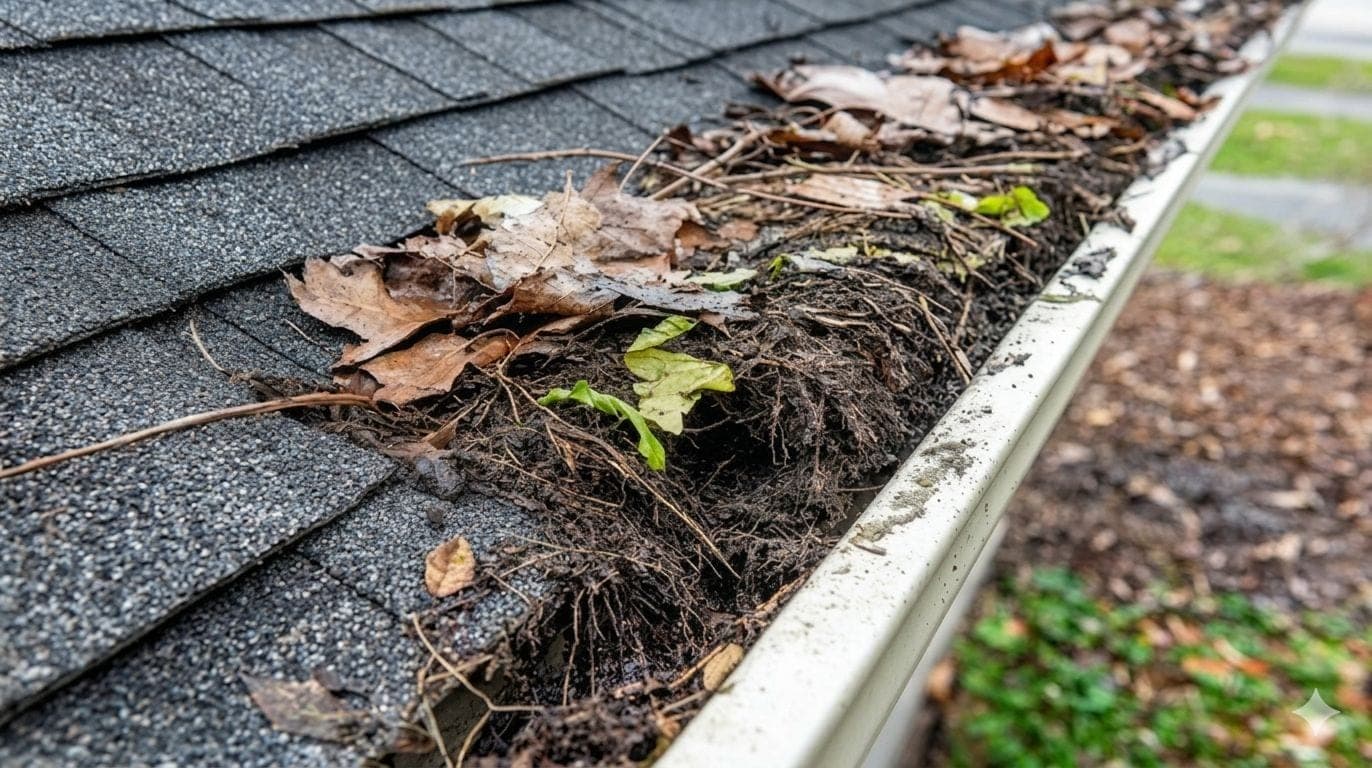
- Debris. Leaves and twigs in the valleys and gutters trap water right against the shingles, giving algae and moss a foothold.
There is a neighborhood angle too. Those algae spores travel on the wind, so one heavily streaked roof tends to seed the houses downwind of it. If your street is older and wooded and a few roofs are already dark, yours is on the clock. The roofs we get called out to streak worst on the shaded, north-facing slopes and down in the valleys, the spots that stay damp the longest. The shadier and more tree-covered your lot, the sooner it shows and the more often it needs a clean.
Rather leave it to a pro?
We will read it in person and tell you exactly what it needs. Veteran-owned, free estimate, no trip fee.
GET MY FREE ESTIMATEWhy you never pressure wash a shingle roof
This is the part that costs people money. A pressure washer aimed at asphalt shingles tears off the protective granules, the gritty top layer that shields the shingle from the sun and sheds water. Once those granules are gone, the shingle ages fast and can start to leak. High pressure can also force water up under the shingles and into the decking.
On top of the damage, blasting your roof can void the manufacturer's warranty. Shingle makers spell out soft washing as the method they recommend, and high pressure is a fast way to lose that coverage. You can strip the streaks off with force and still lose years off the roof in the process.
We get called out to roofs all the time where someone already ran a pressure washer over the streaks. You can spot it from the driveway. There are bald patches where the granules blew off, and that grit does not come back once it is gone.
There is a safety side too. A wet roof is a slick roof. Walking your own shingles to clean them is how people fall and get hurt. Pros work from a ladder or the ground wherever the job allows, and they reach the surface without standing on a wet slope.
How a pro cleans a roof the right way
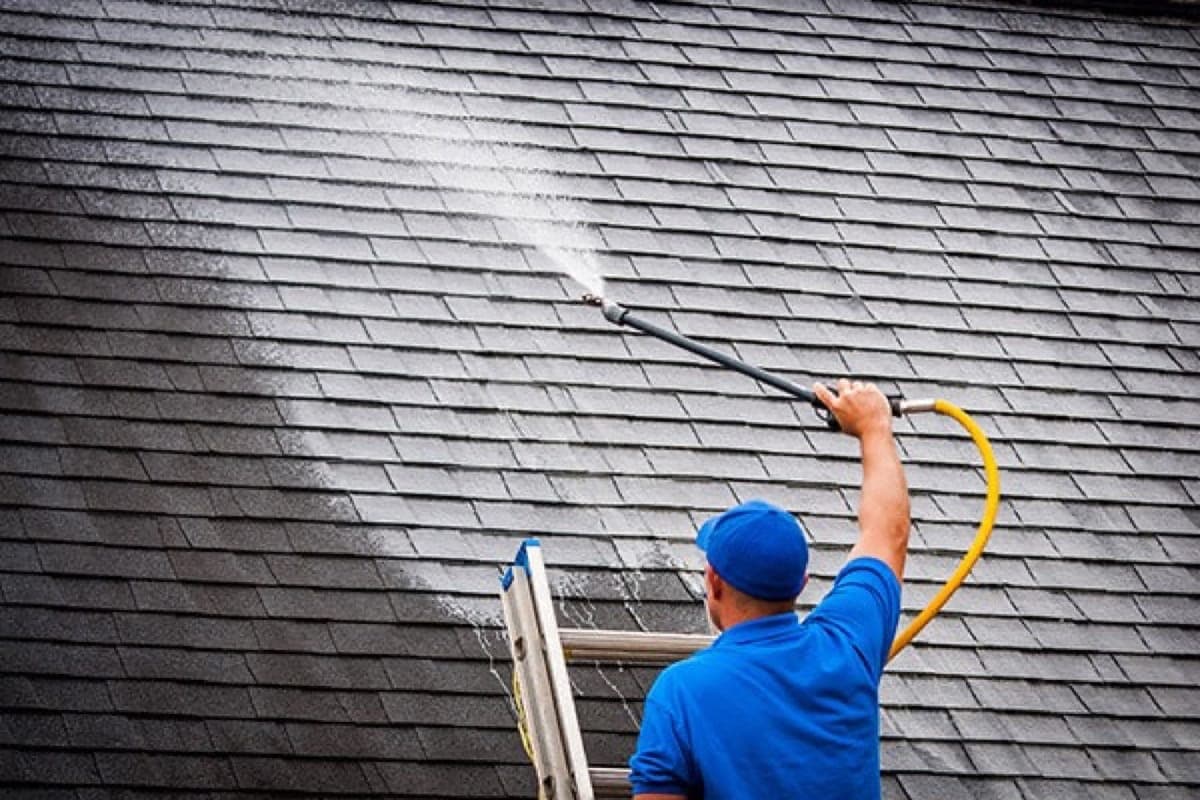
The correct method is a soft wash. That is low pressure, more like a heavy garden-hose flow than a blast, paired with a cleaning solution that does the real work. The solution kills the algae and moss at the root, then a gentle rinse carries it off. No granules stripped, no water driven under the shingles.
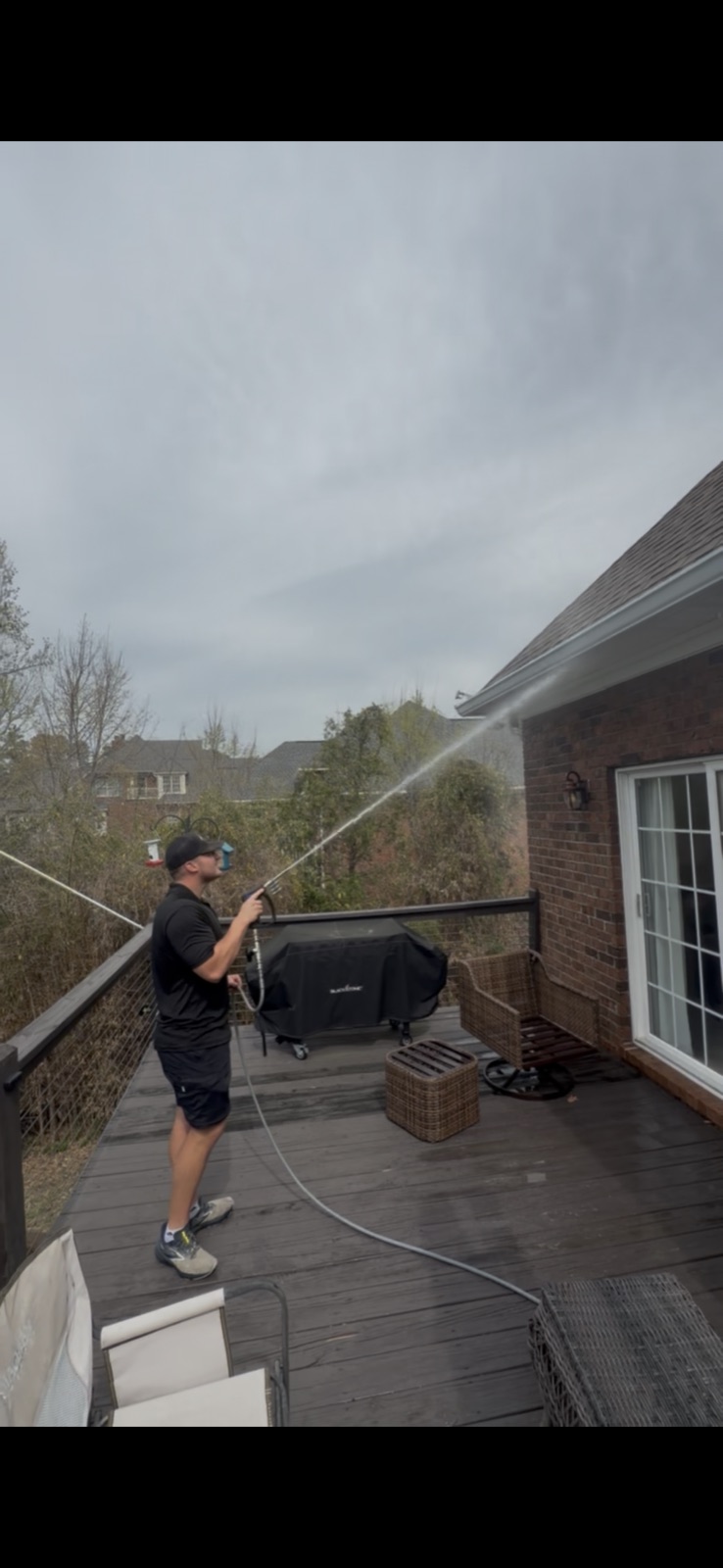
Because soft washing kills the growth instead of just knocking the top layer off, it comes back slower than it would after a pressure rinse. Slower, not never. The spores are always in the air here, and our humidity invites them back. What a good clean buys you is a long, fresh stretch before the roof needs attention again.
A pro reads the roof before any solution goes on: shingle age, slope, how much moss is in the valleys, and where the gutters and plants sit below. Then they mix the solution to the right strength, protect the landscaping, and rinse it clean. That read is the difference between an even, safe result and a roof damaged by a guess. You can see how we handle it on our roof cleaning in Columbia page, and we run the same process for Lexington and Irmo roofs.
Common mistakes to avoid
- Renting a pressure washer and aiming it up. The single most expensive mistake. It strips granules, can void the warranty, and risks a fall off a wet roof.
- Pouring straight bleach off a ladder. Too strong in some spots and too weak in others, and the runoff can kill the shrubs and grass below if nobody is protecting them.
- Waiting until the whole roof is dark. Light streaks are an easy clean. Thick moss in the valleys means moisture is already working on the shingles and decking.
- Ignoring the gutters and tree cover. Clogged valleys and heavy shade keep the roof damp, so the growth comes back faster no matter how good the clean was.
Catching it early is the whole game. Light streaking is a quick, clean job. Let the moss set into the valleys and you are paying to fix moisture damage, not just stained shingles. If your shingles are streaking, a quick look from a pro tells you exactly what the roof needs, and what it does not.