Conner Laugh · Bub's Pressure Washing
Veteran-owned, licensed & insured · Published June 7, 2026
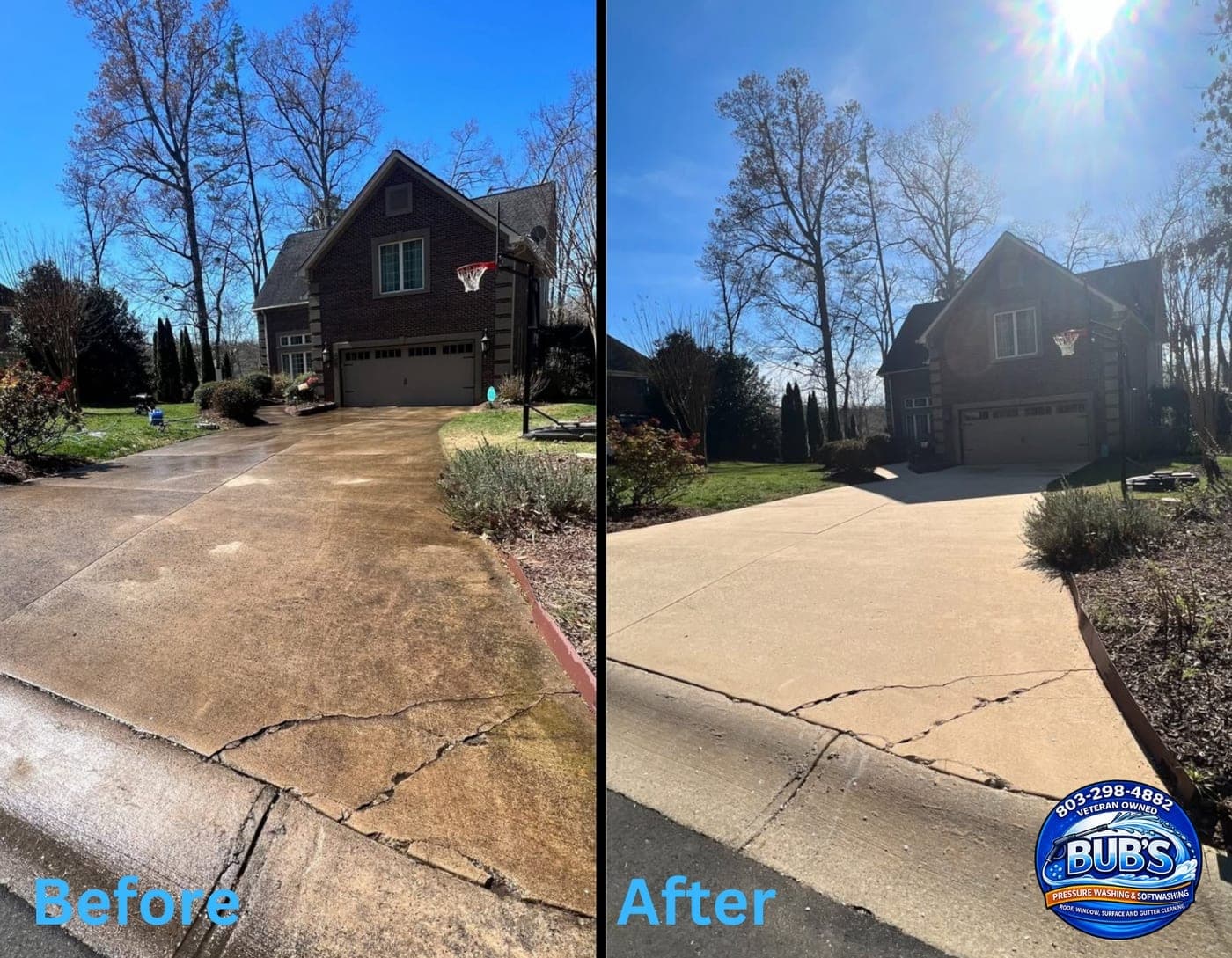
You looked at the orange creeping across your concrete, grabbed a pressure washer, and blasted it. And it is still there. Out here in the Midlands, that color is almost never dirt, and it does not come off the way grime does. The pressure washer you reached for will not lift it, and on a bare wand it can actually make things worse. The good news is it cleans up. The catch is that it takes the right treatment, not just more pressure.
Here is the plain version. That orange is red clay, a mineral stain soaked into the concrete, not a living growth sitting on top of it. Force alone will not pull it out, and bleach will not touch it. It takes a targeted treatment first, then an even pass with a surface cleaner. This article tells you why South Carolina driveways turn orange, why the usual fixes fail, and how a pro actually gets the color out.
Why your driveway is turning orange
The Midlands sits on red clay soil, and that clay is full of iron. When rain carries mud and clay runoff across your concrete, the iron oxidizes, basically rusts, and soaks an orange-red stain down into the pores of the slab. It is the same thing that happens when a nail sits on concrete and leaves a rust ring. The longer the clay sits, the deeper the stain sets.
We see it worst in a few spots: driveways below a slope or a flower bed, edges where mulch and soil wash down, and newer homes where the yard was recently graded and the bare clay is still settling. A downspout dumping runoff onto the slab will do it too. If clay keeps washing onto the same spot, the stain comes back no matter how well you clean it.
Why pressure washing and bleach will not fix it
This is where people waste a Saturday. A bare pressure-washer wand will not lift a stain that has soaked into the pores, and cranking the pressure to force it just etches the concrete and leaves zebra stripes you will see for years. Bleach does not help either. Bleach and a soft wash kill organic growth like algae and mold, but red clay is not alive. It is a mineral, and chlorine does nothing to it.
We get called out to plenty of driveways where the homeowner already blasted the orange or poured bleach on it, and it sat there exactly the same. Here is the part most people miss: a Midlands driveway usually has two problems at once, the green organic growth and the red clay or rust. They are different stains and they need different treatments. The green gets killed and rinsed, the clay gets a targeted treatment, and you have to handle both.
| What you see | What it is | The fix |
|---|---|---|
| Orange or red staining | Red clay and rust, a mineral (inorganic) | A targeted acid treatment, then an even surface-cleaner pass |
| Green or black film | Algae and mold (organic growth) | Killed at the root with a soft wash, then rinsed off |
| Dark oil spots | Oil and grease (inorganic) | A degreaser worked in before the wash |
| Even grime, no real color | Dirt and pollen | The surface cleaner brings it back to one color |
Rather leave it to a pro?
We will read it in person and tell you exactly what it needs. Veteran-owned, free estimate, no trip fee.
GET MY FREE ESTIMATEWhat actually removes red clay
Red clay and rust come out with a targeted, acid-based treatment, not bleach and not raw force. A pro puts the right remover on the stained areas, gives it time to work into the surface, and agitates it so it lifts the mineral up out of the pores. Then the whole slab gets run with a surface cleaner, a spinning-bar tool that holds even pressure, so it comes back one even color instead of a patchwork of treated and untreated spots. The green growth gets killed and rinsed first so you are not fighting two things at once.
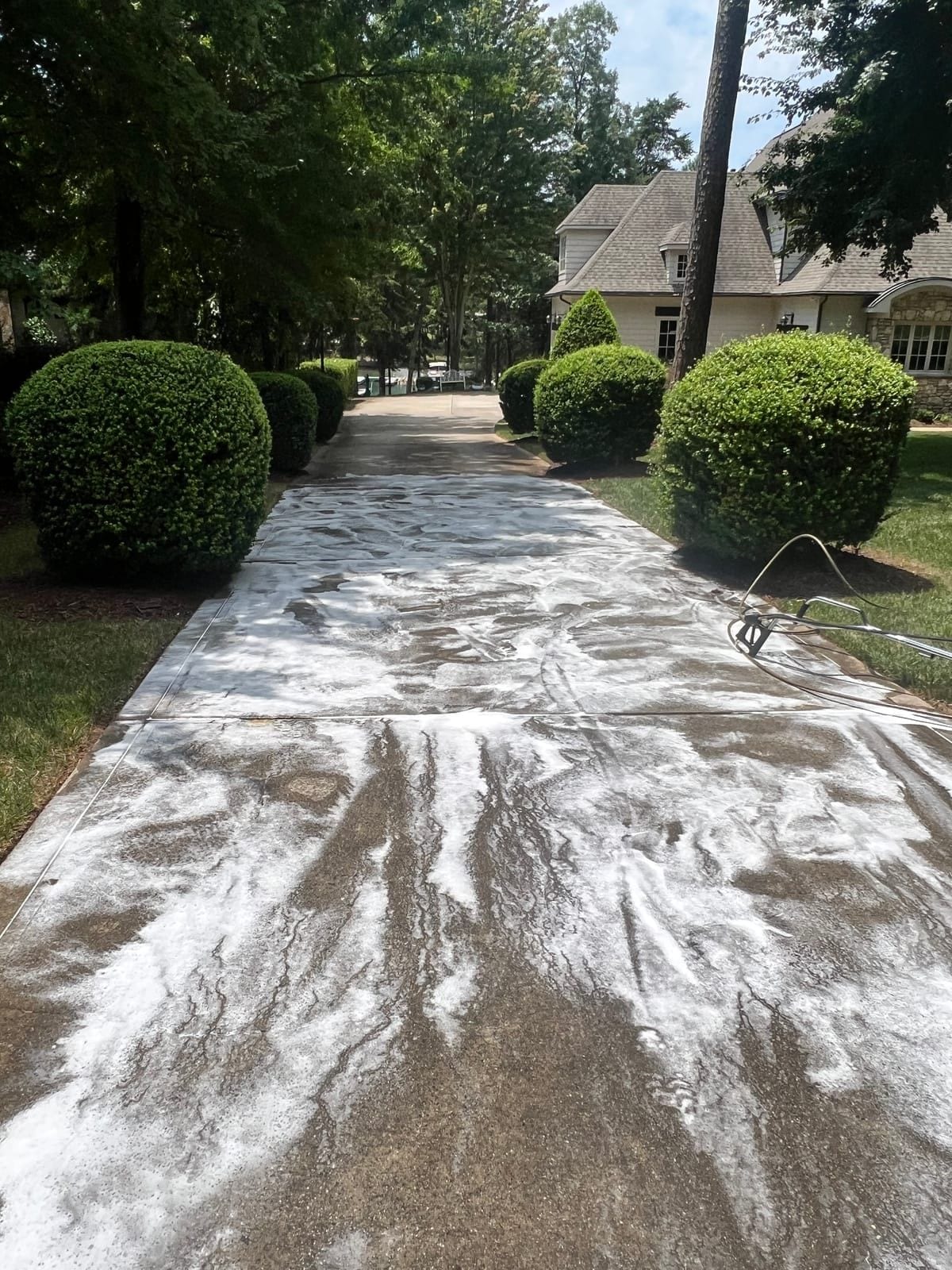
Honesty matters here. Most of the stain lifts and the driveway looks dramatically better. But red clay that has been baking into the concrete for years can leave a faint shadow even after a good treatment. The oldest, deepest stains are the ones that fight us. A real clean gets the color out and the slab looking even, not a promise of brand-new concrete. Anybody telling you a years-old stain comes out perfect is overselling it.
Why this is worth a pro
The acid side is where doing it yourself gets risky. Too strong, or left on too long, and the treatment etches the concrete or burns the grass and plants along the driveway. Too weak and it does nothing. A pro knows the right strength for your concrete, pre-wets and protects the landscaping from the runoff, and runs the surface cleaner so there are no wand stripes. That read on the surface, what is organic and what is mineral and how hard to push, is the difference between a clean driveway and a damaged one. The same crew handles both stains on one trip. You can see how we do it on our driveway cleaning in Columbia page, and we run the same process for Lexington and Irmo driveways. If you are also fighting green on the house or roof, here is the difference between soft washing and pressure washing.
Common mistakes to avoid
- Cranking the pressure to force it out. High pressure on a bare wand will not lift an embedded mineral stain, and it etches the concrete and leaves zebra stripes.
- Reaching for bleach. It clears the green growth but does nothing to the red clay. The orange stays right where it was.
- Pouring on a strong acid yourself. The wrong strength burns your plants and grass or eats the surface of the concrete, and a bad mix can stain it worse.
- Ignoring where the clay comes from. If runoff keeps carrying clay down from a bed, slope, or downspout, the stain comes right back after the clean.