Conner Laugh · Bub's Pressure Washing
Veteran-owned, licensed & insured · Published July 23, 2026
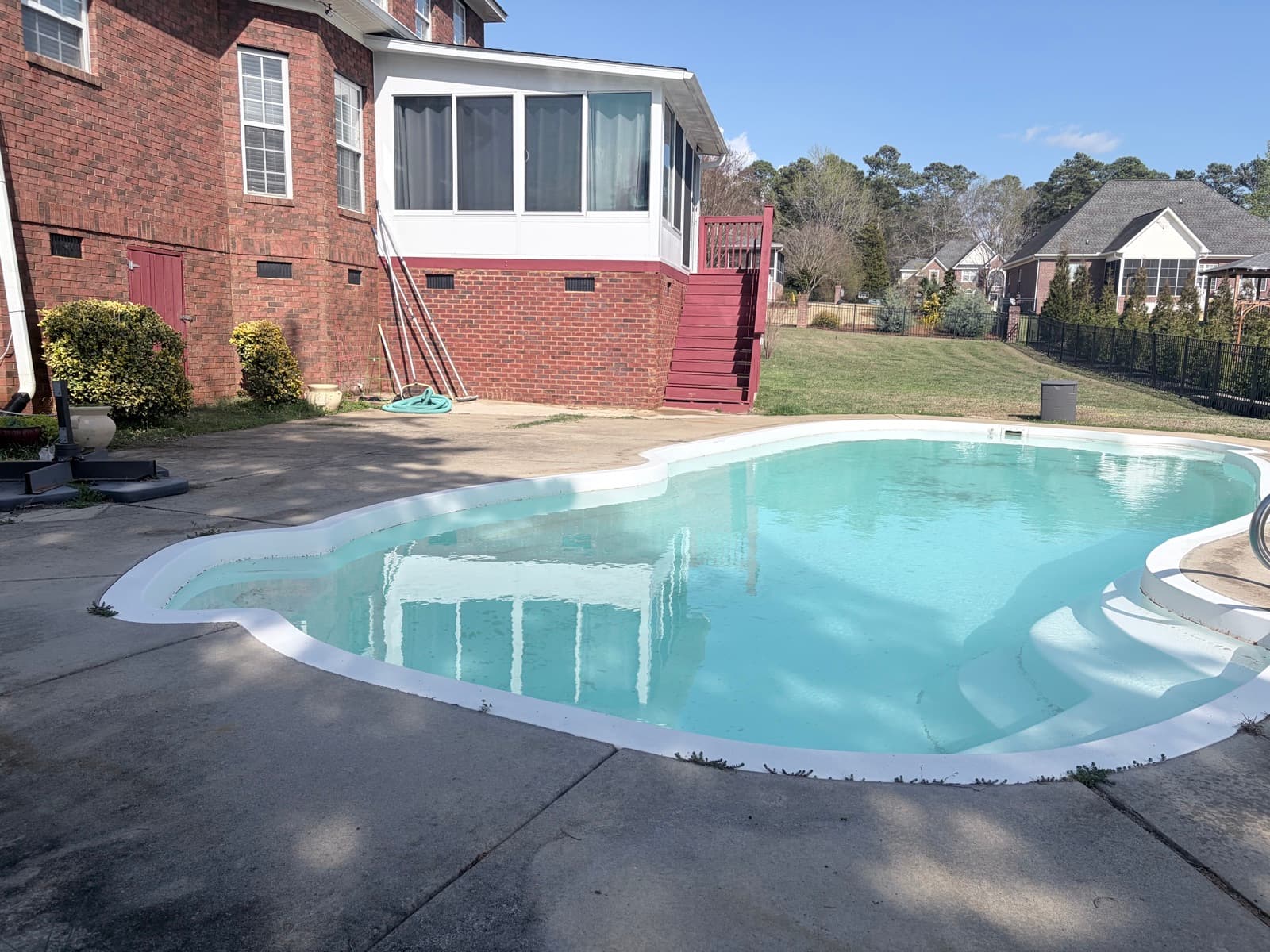
Nobody calls us about a dirty pool deck in March. The calls come in summer, and they usually come after a scare. Somebody's kid hit the wet corner at a run, or a guest stepped out of the water onto the shaded end and their foot kept going. The deck did not look dangerous. That is the whole problem with pool decks. The thing that makes them slick is nearly invisible until it is wet.
Why pool decks get slippery faster than any other concrete
A pool deck gets slippery when wet because an invisible algae film grows on concrete that never fully dries. Your driveway gets rained on and dries. Your pool deck gets splashed all day, every day the pool is in use. The wet keeps coming back before the slab ever fully dries. That standing dampness is everything an algae film needs, and concrete gives it a textured surface to root into. Add the shade from the house or the trees on one end, and you get a deck where half the slab is basically never dry during swim season.
Then feet polish it. Hundreds of wet barefoot trips a summer press the film flat and smooth, and a smooth film on wet concrete is about as close to ice as a South Carolina backyard gets. The green algae on the shaded end announces itself. Meanwhile the film around the steps and walkways builds without changing the color much, and that is where people go down.
The step-out spot
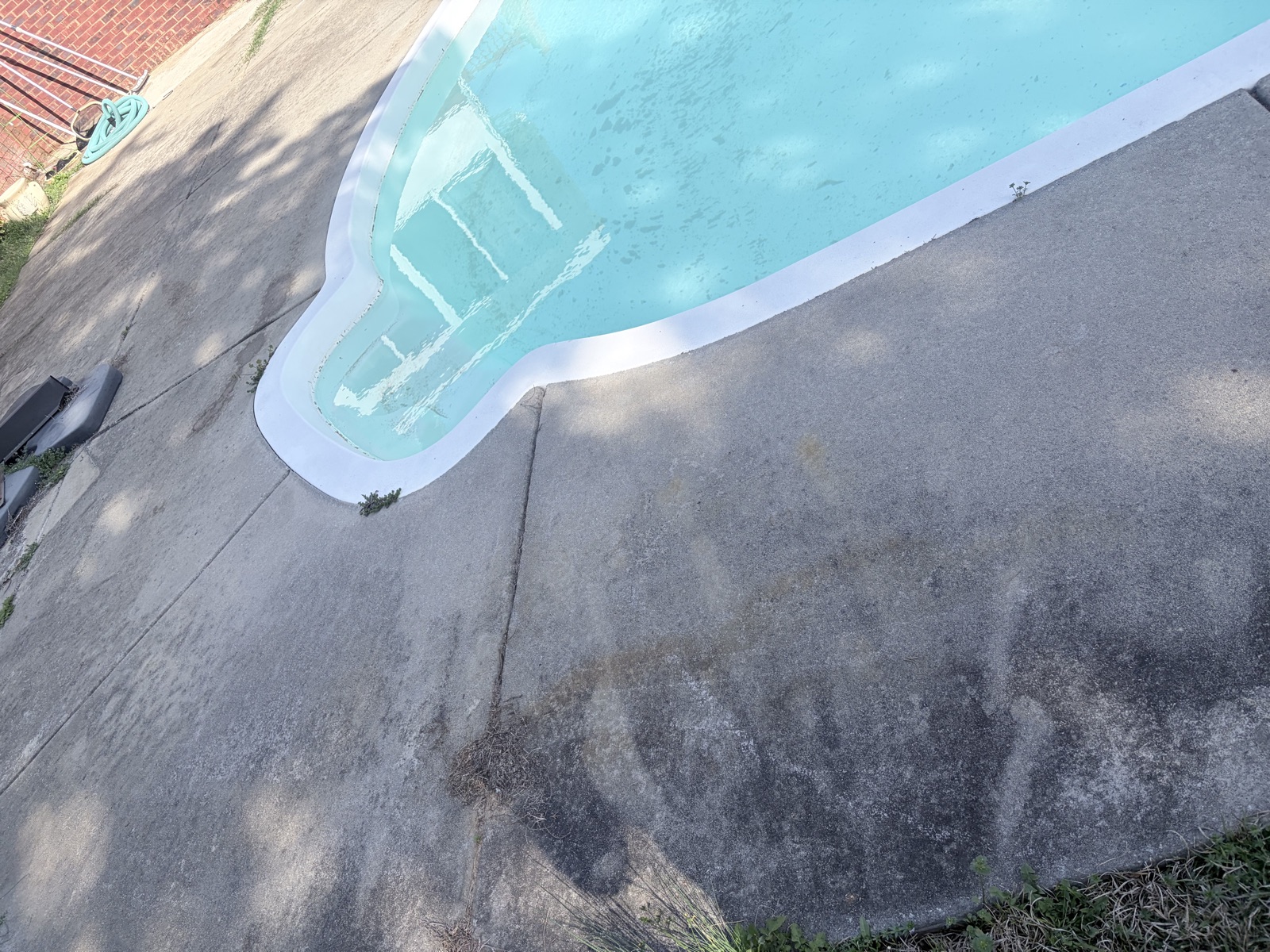
Ask anyone who has taken a fall at a pool where it happened and the answers cluster in the same few feet. The step-out, where swimmers exit with streaming feet onto concrete that never dries. The ladder landing. The shaded corner on the route back from the house. We walk a lot of decks, and those spots are almost always the darkest concrete on the slab, because they get the most water and the least sun.
That is worth taking seriously in a state where the pool runs from May to October. A deck cleaning is one of the few jobs we do where the argument is mostly about safety, with the looks as a bonus.
What the film costs you beyond the slip
Left alone, the film does more than grease the concrete. It holds dampness against the slab around the clock, and damp concrete collects everything. Mildew shadows spread out from the shaded end, dirt bonds deeper into the texture instead of rinsing off, and by the end of a season the deck reads gray in photos even when it is freshly hosed. The practical difference shows up at cleaning time. A deck treated mid-season comes back fast and even. A deck that carried the film for a year or two takes more work to reach the same finish, because the staining has had time to set below the surface. The slip risk is the urgent reason to deal with it. Keeping the slab from aging early comes along free.
Rather leave it to a pro?
We will read it in person and tell you exactly what it needs. Veteran-owned, free estimate, no trip fee.
GET MY FREE ESTIMATEThe finish decides the fix
Here is where pool decks get wrecked by good intentions. A plain broom-finished slab is tough, and it can take a proper cleaning with real equipment. But a lot of Midlands pool decks are not plain concrete. They are stamped, colored, or coated, and those finishes will streak, strip, or lose their color under a hard, narrow blast from close range. We have seen decks where a DIY afternoon fixed the slick and pulled the color off in stripes at the same time.
The professional version reads the surface first. The equipment gets matched to the finish, gentler on decorative surfaces, and a treatment goes down ahead of the wash to kill the film where it grows, so the machine does not have to do all the work with force. The result is one even tone across the whole deck, no stripes, no stripped patches, and a surface with its texture back. That is the version we run on pool decks in Lexington and across the Midlands, and it starts with reading your finish in person, free.
One more cause worth checking before you blame algae: sometimes the sealer is the slick. Glossy film-forming sealers look sharp dry and turn slick as glass wet, which is the wrong trade for concrete that lives next to water. If the deck got slippery right after it was sealed, you are feeling the film, not a growth. A penetrating sealer, or one with a grip additive mixed in, protects the slab without the glass. We check for it on the walk-around, because the fix for a sealer problem is a different job than the fix for algae.
What about the pool water?
The honest answer: some of a deck cleaning reaches the pool water. Fine dirt rinses toward the low points, and a little cleaning solution rides along with it. We keep the bulk of it off the coping and work away from the edge, but a deck wraps around the water, and physics does not take sides. The good news is the solution is in the same chlorine family the pool already runs on, so it does not wreck anything. Worst case, your pool tech rinses the fine dust out of the filter and nudges the pH back where they want it. Any company that promises absolutely nothing gets in is telling you what you want to hear.
The white band at the waterline
One more limit worth knowing about: that white crust at the waterline is usually calcium scale, minerals left behind as water evaporates. It is not alive, so the treatment that kills algae does nothing to it. Scale is a separate fix, and even the right treatment tends to reduce it rather than erase it. We flag it on the walk-around so the before-and-after in your head matches the one on your deck.
How to keep a pool deck less slippery through the season
Killing the algae film is what makes a pool deck less slippery; a rinse only buys you an afternoon. After a real cleaning, most decks hold their grip well into the season, with the shaded end the first to hint at regrowth. Prevention is limited but real. More sun and airflow help where the yard allows, a penetrating sealer can slow how fast the film roots into the pores, and a quick rinse of the splash zone after heavy pool days denies it some food. Mostly, though, you are managing a rematch, and the win is catching it early. When the shady corner starts to darken, that is the deck telling you it is time again, before anyone finds out the slippery way.
We clean pool decks across the Midlands lake country and the metro, from Lake Murray down to Cayce, and every job starts with an in-person look at your finish, your trouble spots, and your waterline, free. If the green on the deck has cousins climbing the house wall, our guide to green algae on siding explains that half. And if you want the deck ready before the next pool party, get your free quote and we will walk it with you.