Conner Laugh · Bub's Pressure Washing
Veteran-owned, licensed & insured · Published June 5, 2026
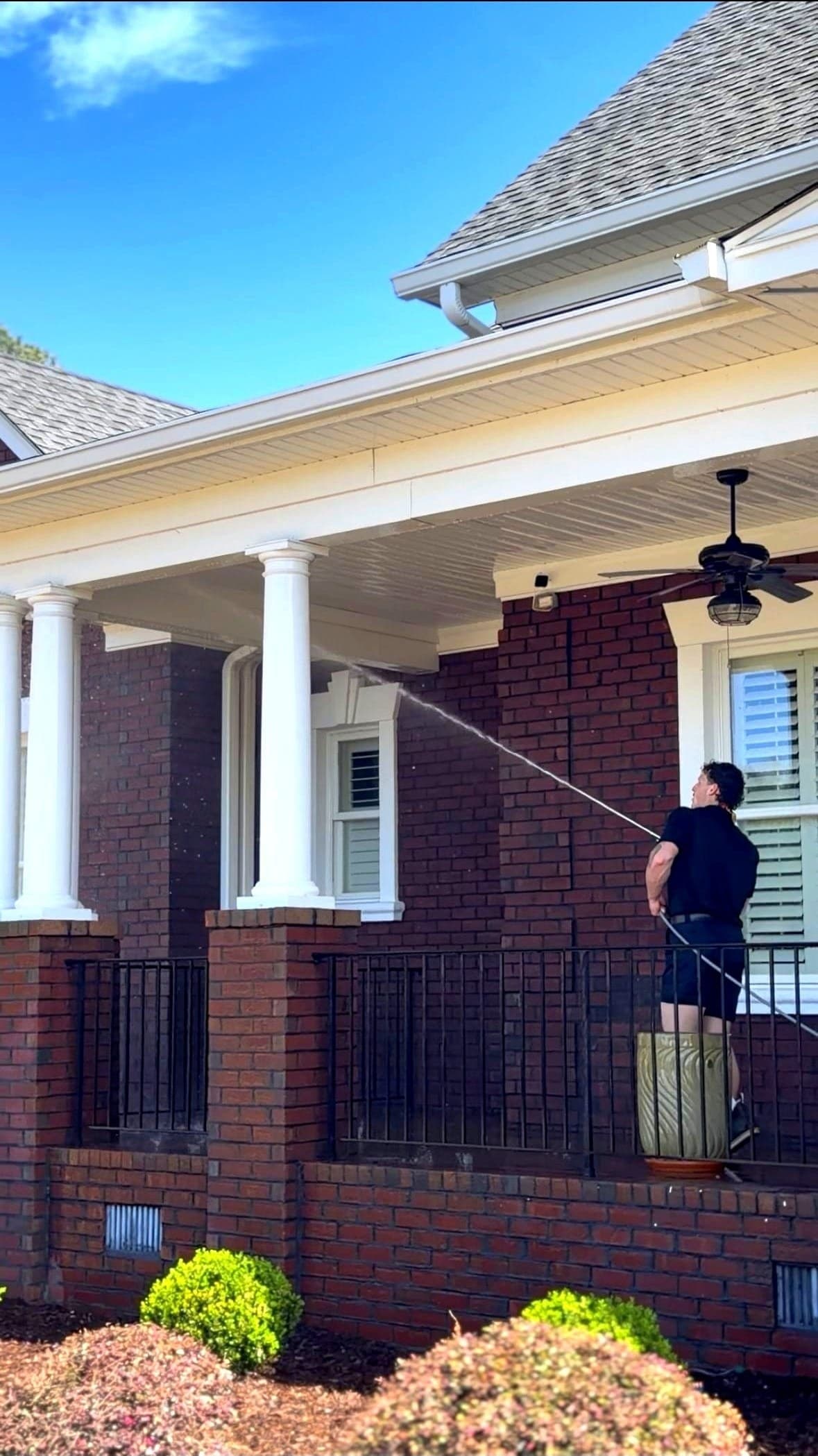
If your roof has black streaks and your driveway has gone green and grimy, you have probably run into two words online: soft wash and pressure washing. They sound like the same thing. They are not. Use the wrong one on the wrong surface and you can crack siding, tear up shingles, or carve lines into your concrete.
Out here in the Midlands, the humidity does a number on house exteriors. Algae, mold, and mildew love the shade and the damp, and they come back every year. The real question is not whether to clean, it is which method clears the buildup without wrecking what is underneath. Soft wash and pressure washing do that in opposite ways, and mixing them up gets expensive.
The quick rule is this. Soft wash is low pressure plus a cleaning solution, made for the surfaces that cannot take force, like your roof, siding, and brick. Pressure washing is real force through a surface cleaner, made for hard flatwork like driveways and concrete. Get that right and your house comes clean and stays whole.
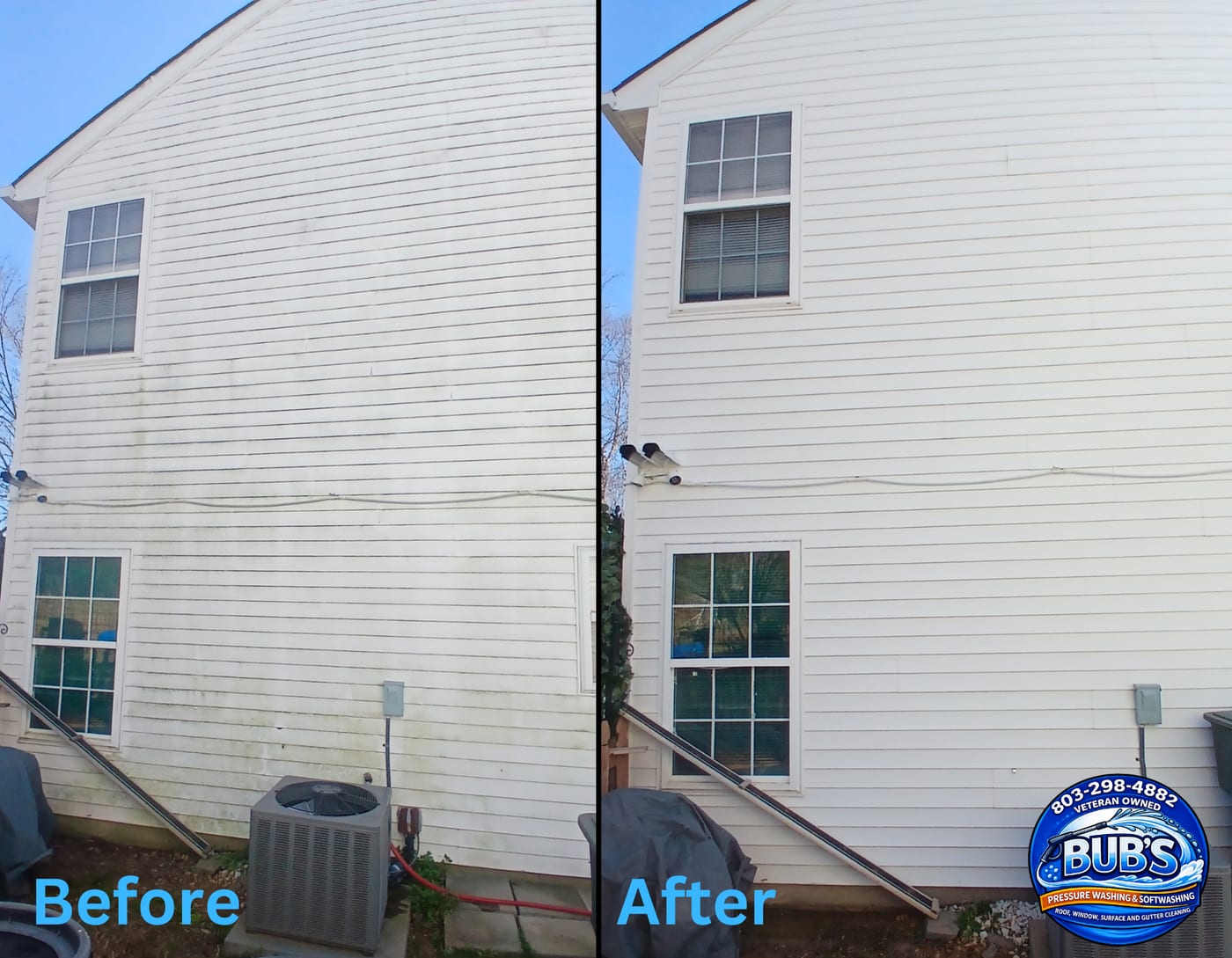
What soft wash and pressure washing actually do
Soft wash is chemistry, not force
Soft washing cleans with a solution at low pressure. The chemistry breaks the algae, mold, and mildew down at the root, and a gentle rinse carries it off. Because it kills the growth instead of blasting the top layer, it comes back slower. And because there is no high pressure, it will not crack vinyl, strip paint, or push water up under your shingles. That is why soft wash is the right call for roofs, siding, brick, and anything painted.
Pressure washing is force for the hard stuff
Pressure washing uses real water pressure to cut through built-up dirt, grime, and stains. On the right surface, that is exactly what you want. The pros run it through a surface cleaner, a spinning bar that holds even pressure across the whole slab, so your driveway comes out one even color instead of zebra-striped. We see plenty of driveways left striped by a bare wand, which is exactly what the surface cleaner avoids. Concrete, driveways, and pool decks can take that force. Your roof and siding cannot.
Why the method matters more in South Carolina
The Midlands climate is a greenhouse for organic growth. Long humid stretches, heavy shade under the pines, and damp that hangs on the north side of the house all feed the algae and mildew that streak your roof and dull your siding. That means SC homes need cleaning more often than drier parts of the country, and it means more chances to reach for the wrong tool. The houses we wash on shaded, north-facing lots green up the fastest, so those are the ones we tend to see on a tighter rhythm.
Which method goes on which surface
The rule is simple: the surface decides the method. Here is how it shakes out on a typical Midlands home.
| Surface | Method | Why |
|---|---|---|
| Roof shingles | Soft wash | Low-pressure solution clears the algae without stripping the protective granules or voiding the shingle warranty. |
| Vinyl or wood siding | Soft wash | Cleans mold and mildew without cracking panels or stripping paint. |
| Brick | Soft wash | Lifts the green out of the pores while leaving the soft mortar joints intact. |
| Wood deck | Soft wash (oxygen cleaner + brightener) | Low pressure and a wood-safe cleaner, never the harsh stuff, so the wood is not furred up. |
| Driveway, concrete, pool deck | Pressure wash (surface cleaner) | Real, even pressure pulls out the grime and brings the slab back to one color. |
| Windows | Low pressure / purified water | Gentle cleaning, often from a water-fed pole on the ground, so the seals do not blow out. |
Rather leave it to a pro?
We will read it in person and tell you exactly what it needs. Veteran-owned, free estimate, no trip fee.
GET MY FREE ESTIMATEWhere homeowners go wrong
Blasting a roof or siding with high pressure
This is the big one. A pressure washer on shingles tears off the protective granules and shortens the life of the roof, and it can drive water up underneath. On siding it cracks panels and forces water behind the wall. It also voids most manufacturer warranties. Those surfaces get a soft wash, every time. If your roof is already streaked, here is what that black stuff actually is.
Trying to soft wash a filthy driveway
Soft wash is great on the organic green, but it will not pull years of oil, grime, and ground-in stains out of concrete on its own. Heavy flatwork needs a surface cleaner running real pressure. The pros pre-treat the green to kill it, then run the surface cleaner for one even color. Oil and rust are a different animal, and they get their own treatment.
Skipping the read on the surface
Every house is a mix, older vinyl, new brick, a wood deck, an aging roof. The right move is to read each surface, its material, age, and condition, before a drop of water goes on it. That is what a pro does on the walk-through, and it is why an in-person look beats a guess over the phone.
Why this is worth a pro
You can rent a pressure washer. Plenty of folks do, and plenty end up with cracked siding, a striped driveway, or a roof that lost years off its life. Honestly, most of the damage we get called out to fix started with a rented machine and good intentions. The hard part is not owning the machine. It is knowing which surface gets force and which gets chemistry, mixing the solution right, and protecting your plants and your house while you work. A veteran-owned crew that does this every day reads the house, picks the right method for each surface, and leaves it clean without the damage. Around the Midlands, that is what we do at Bub's Pressure Washing: soft wash where it belongs, pressure where it belongs, and a free in-person look first.