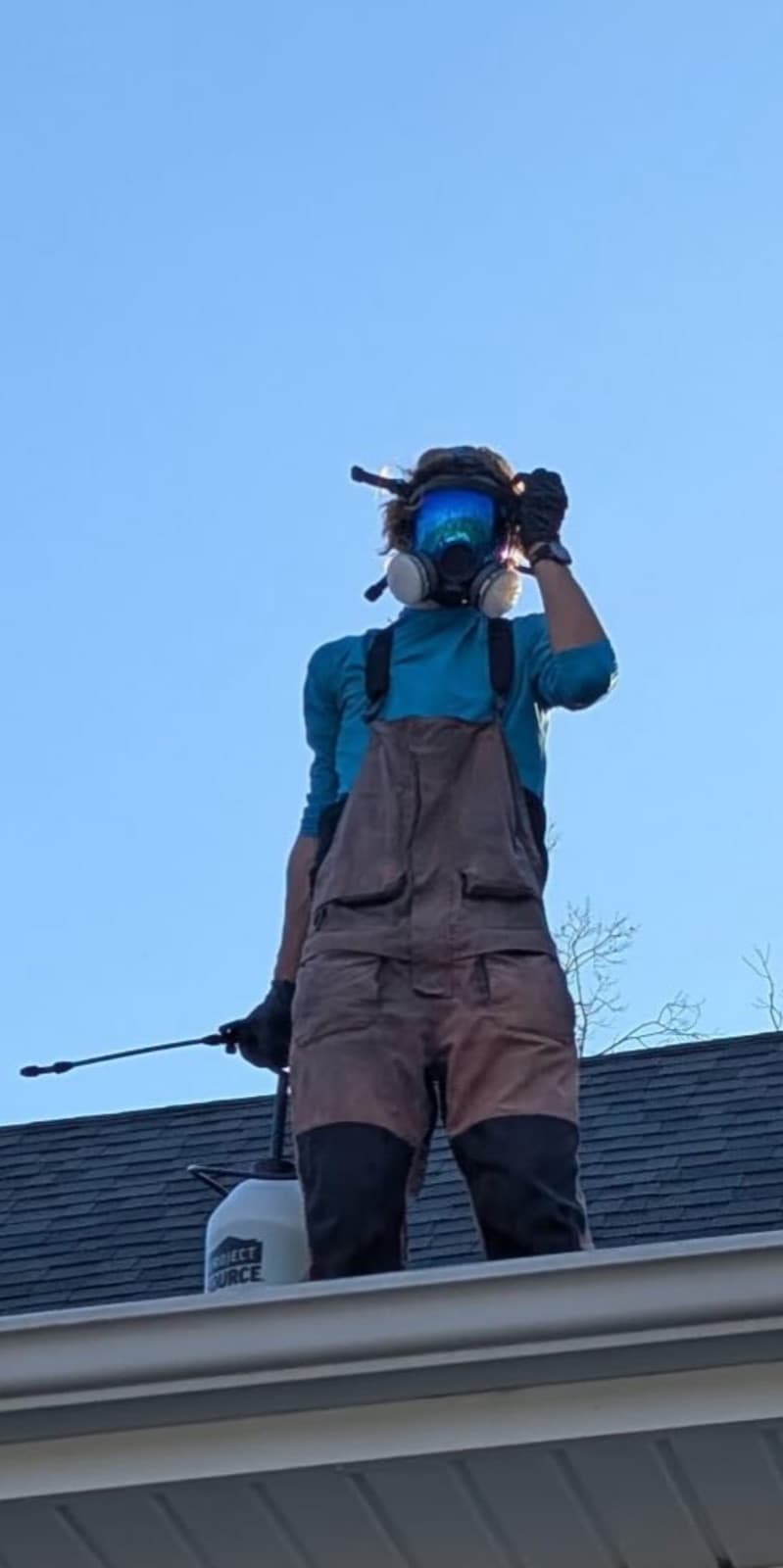
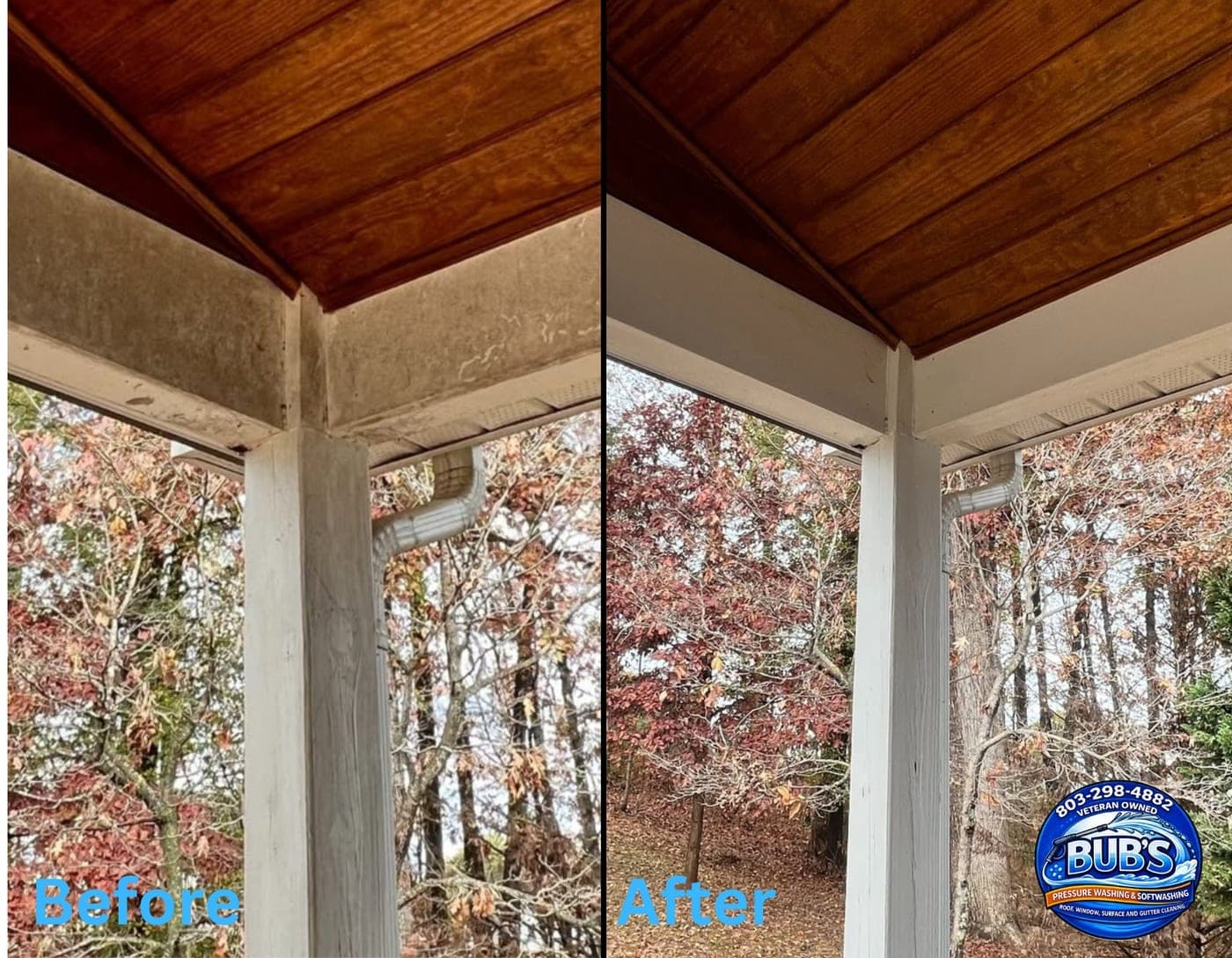
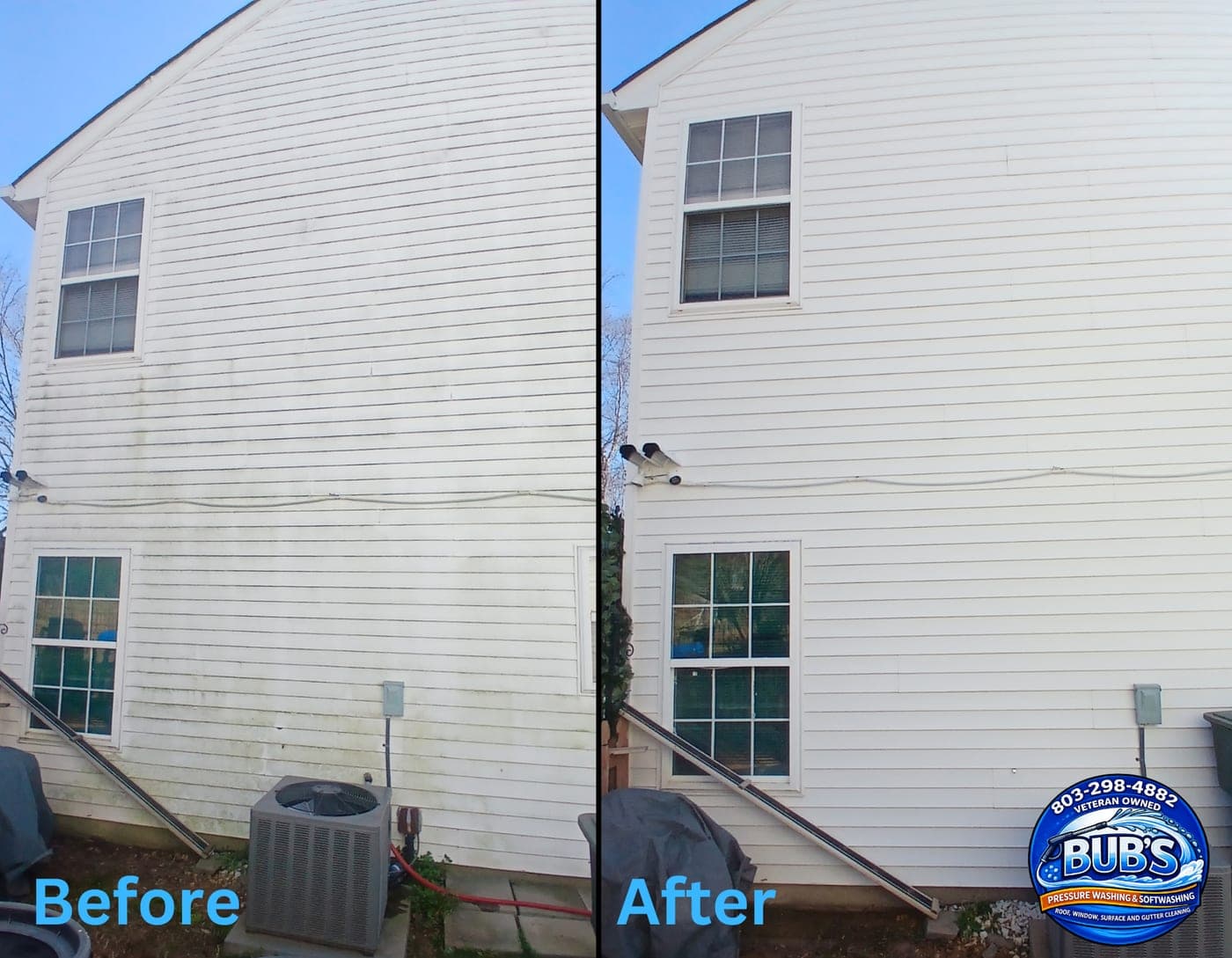
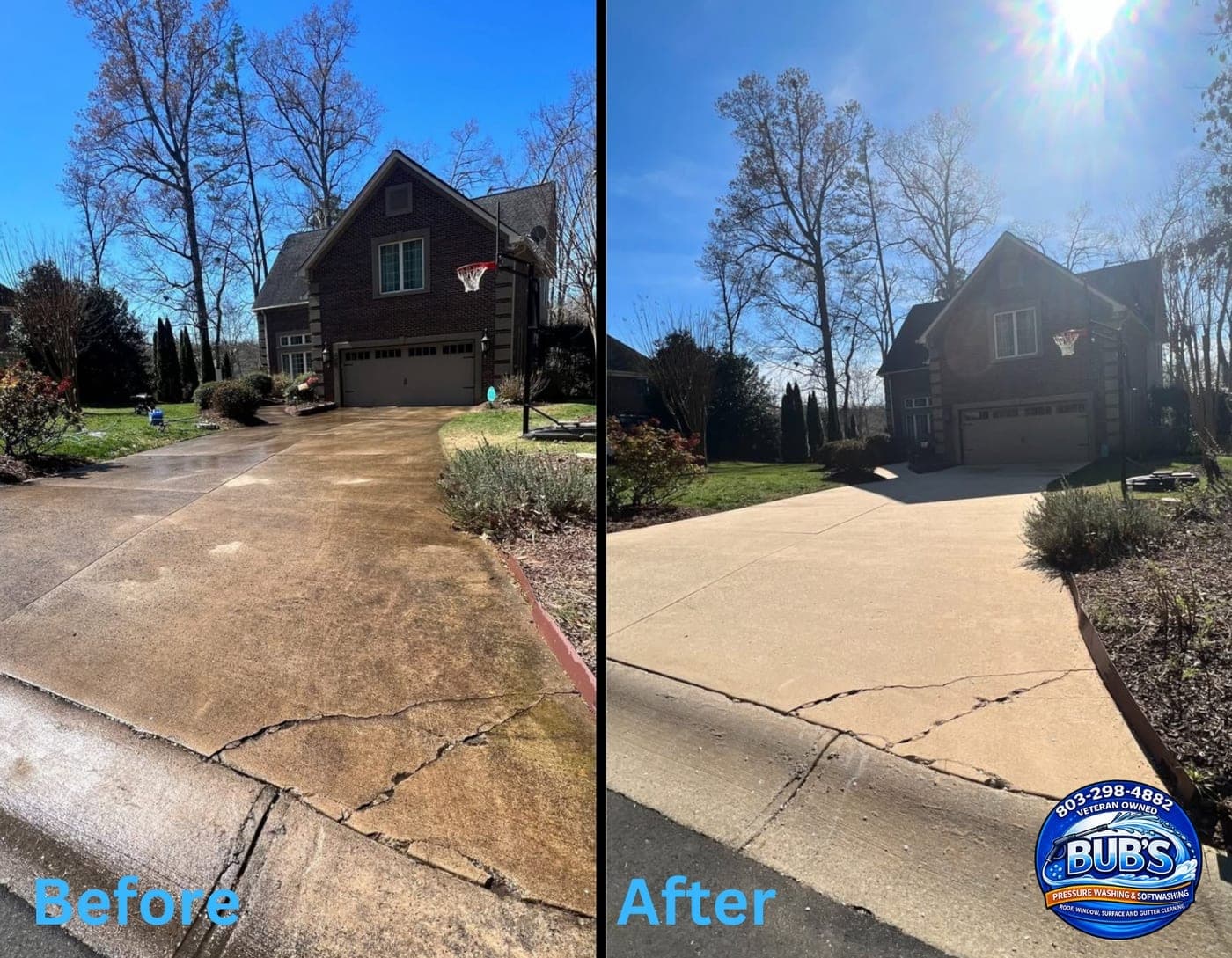
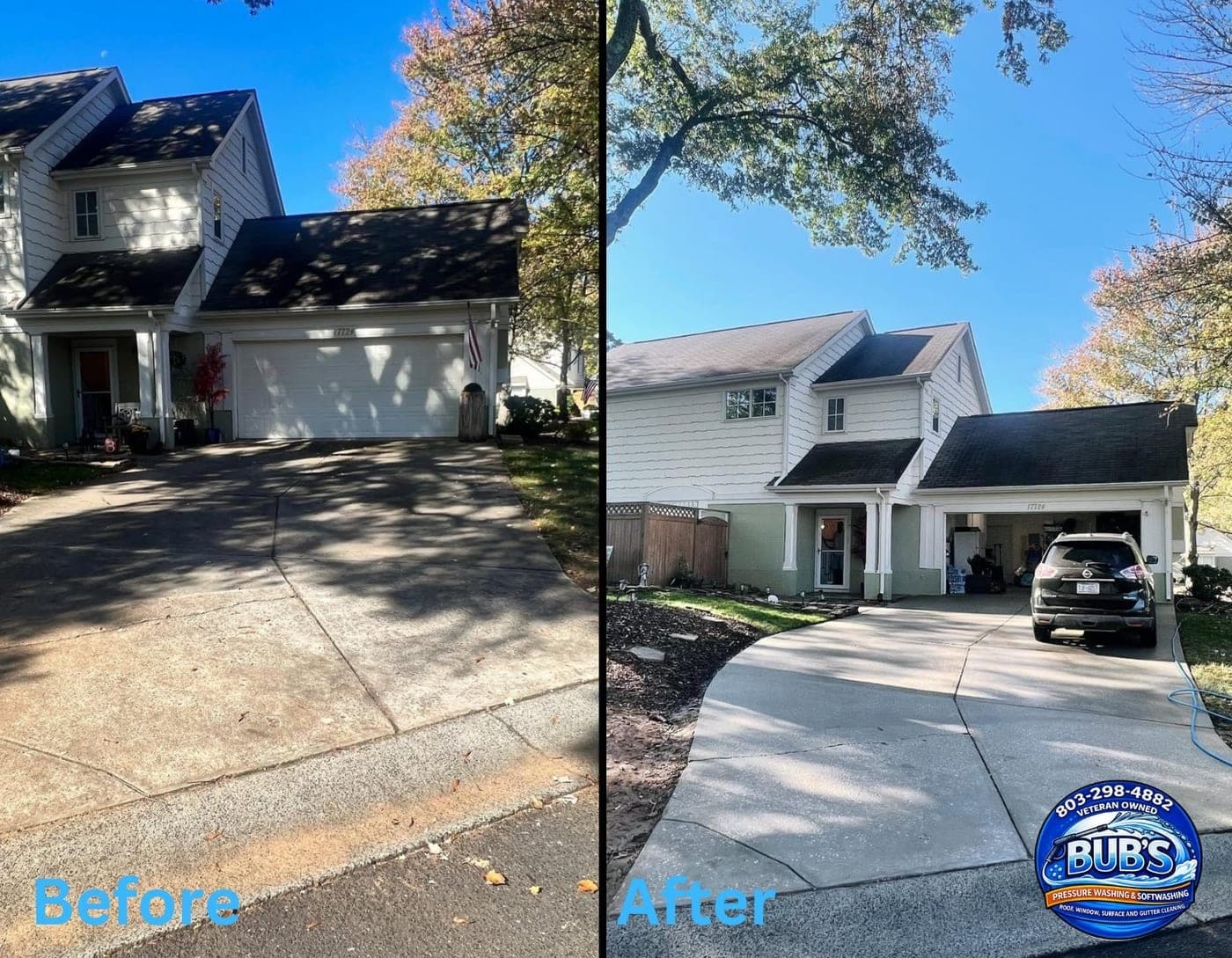
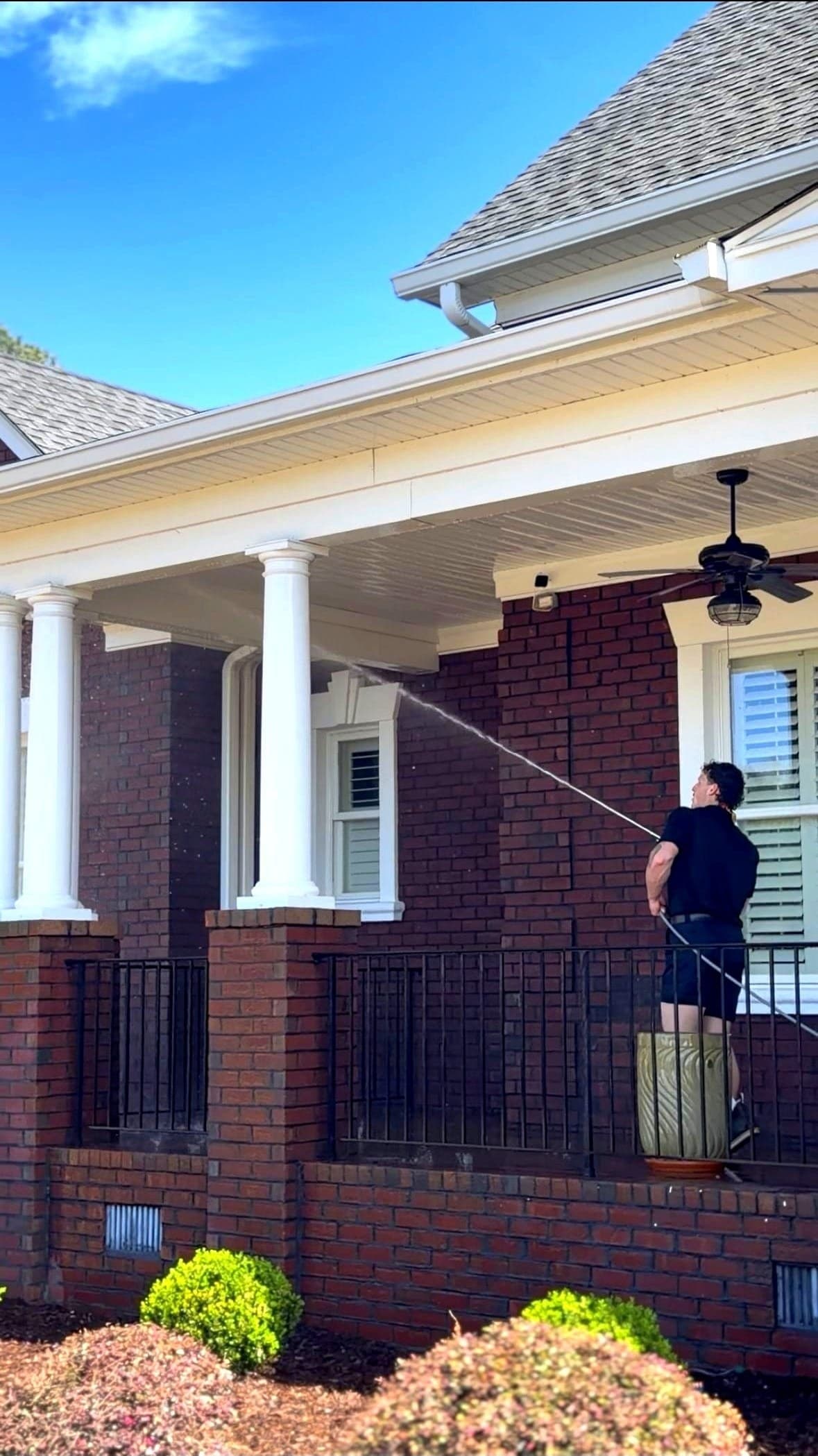
It helps to know what those black streaks actually are. They are algae, a living growth that feeds on the filler in asphalt shingles, and it shows up worst on the north slope and the side tucked under the trees. In the Dutch Fork, where the pine and hardwood canopy shades most roofs, that is a lot of them. Now the part people get wrong. A shingle is built with a granule layer on top that protects it, and high pressure blasts those granules right off and takes years of life off the roof. Walking a steep or older roof to scrub it is dangerous besides. So we soft wash it instead. A cleaning solution does the work, breaks the algae down at the root, and a gentle rinse carries it off. The streaks go, every granule stays put, and we keep to a ladder and the ground wherever the job lets us, never a wet roof.
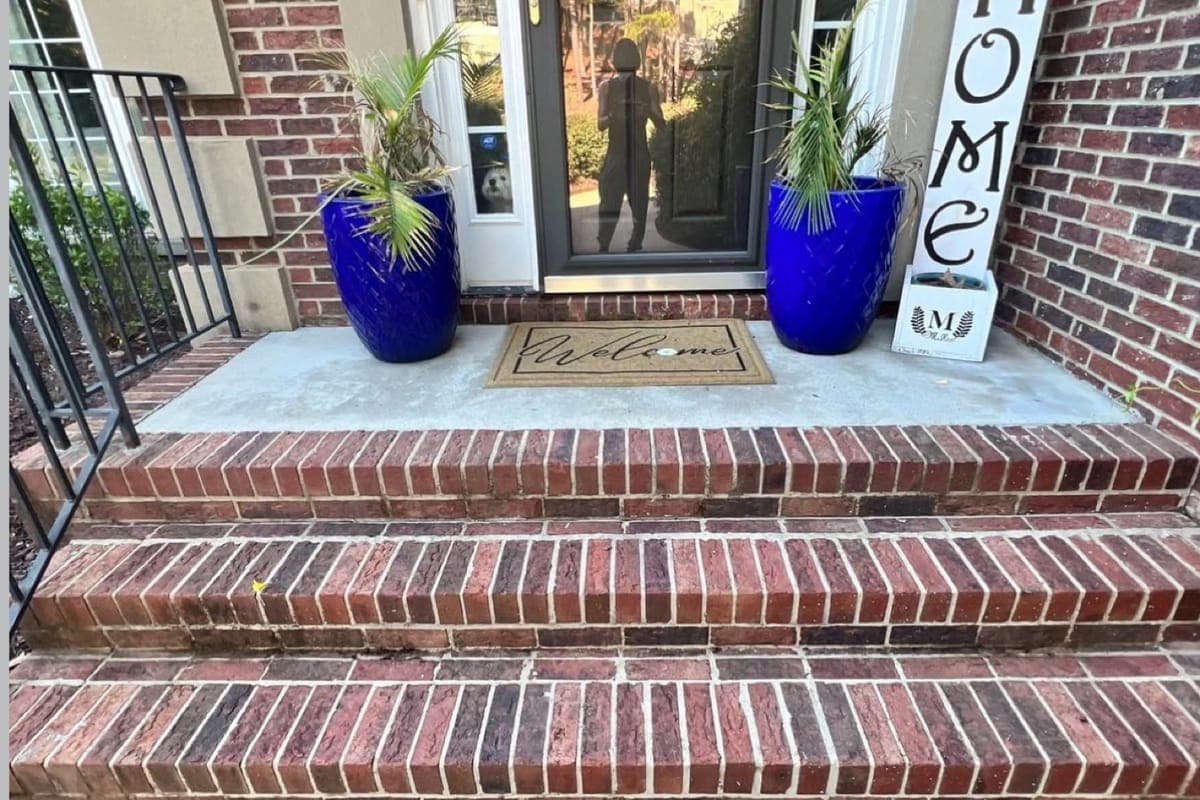
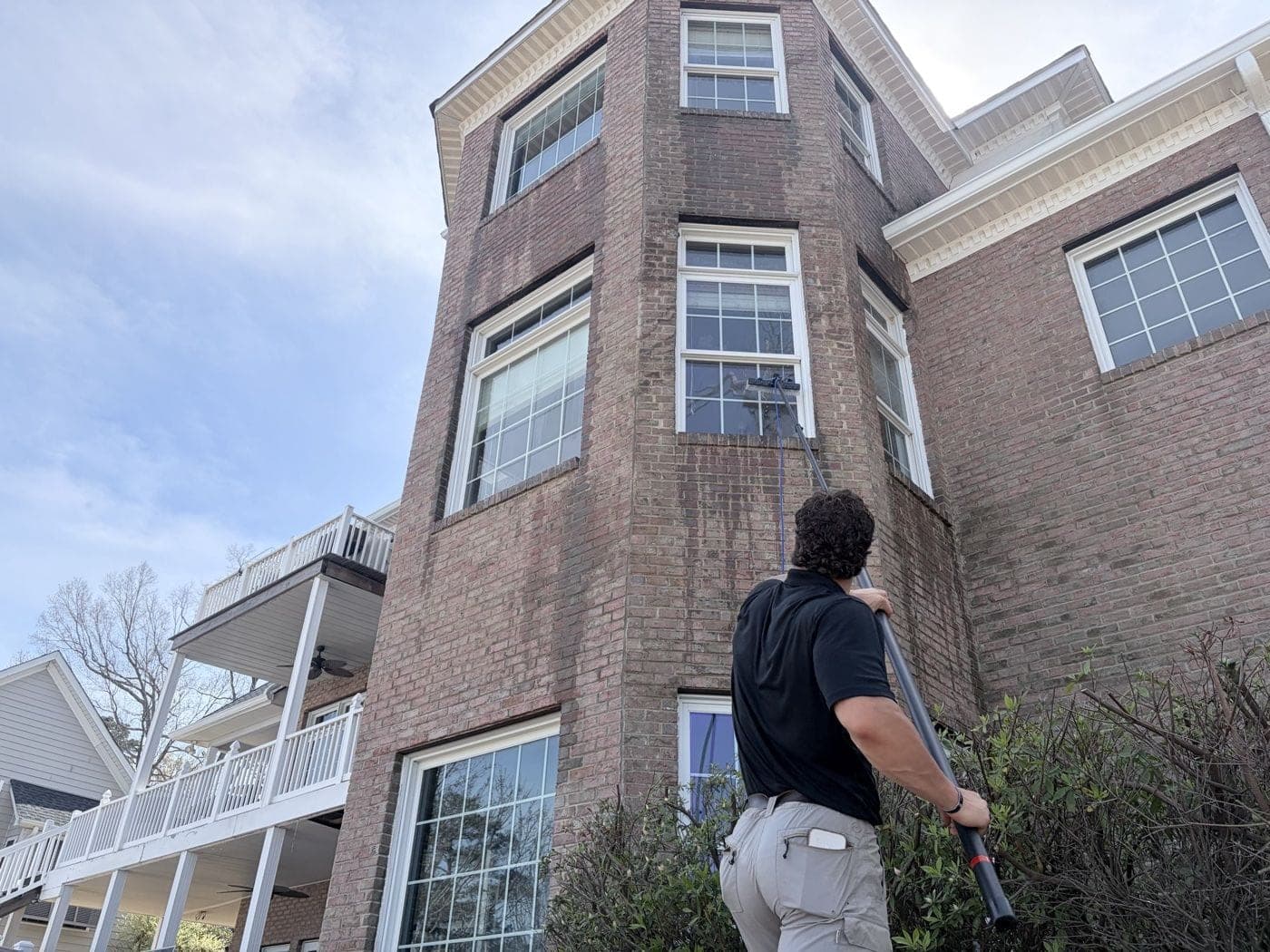
Irmo sits northwest of Columbia in the Dutch Fork, the old German-settled stretch of country between the Broad and Saluda rivers. The town took its name from two railroad men, Iredell and Moseley, and grew up around the Harbison corridor and Saint Andrews Road into a settled suburban place. The bones of it are the established 1970s and 1980s subdivisions, Friarsgate and Seven Oaks among them, sitting under a thick canopy of pine and hardwood, with newer growth still going up around the edges. The Okra Strut festival fills Irmo Community Park every fall, Harbison State Forest runs eighteen miles of trail down toward the Broad River, and out on the Ballentine side the town runs right up to Lake Murray. Dutch Fork schools anchor the place. Most of the homes are vinyl and brick on mature, tree-shaded lots, so the north-facing walls, the roofs tucked under the canopy, and the older concrete out front all green up fast in the Midlands humidity. The town straddles two counties, Lexington and Richland.
From Friarsgate, Bellemont, and Ballentine Estates, Irmo homeowners count on us for roof cleaning done right.