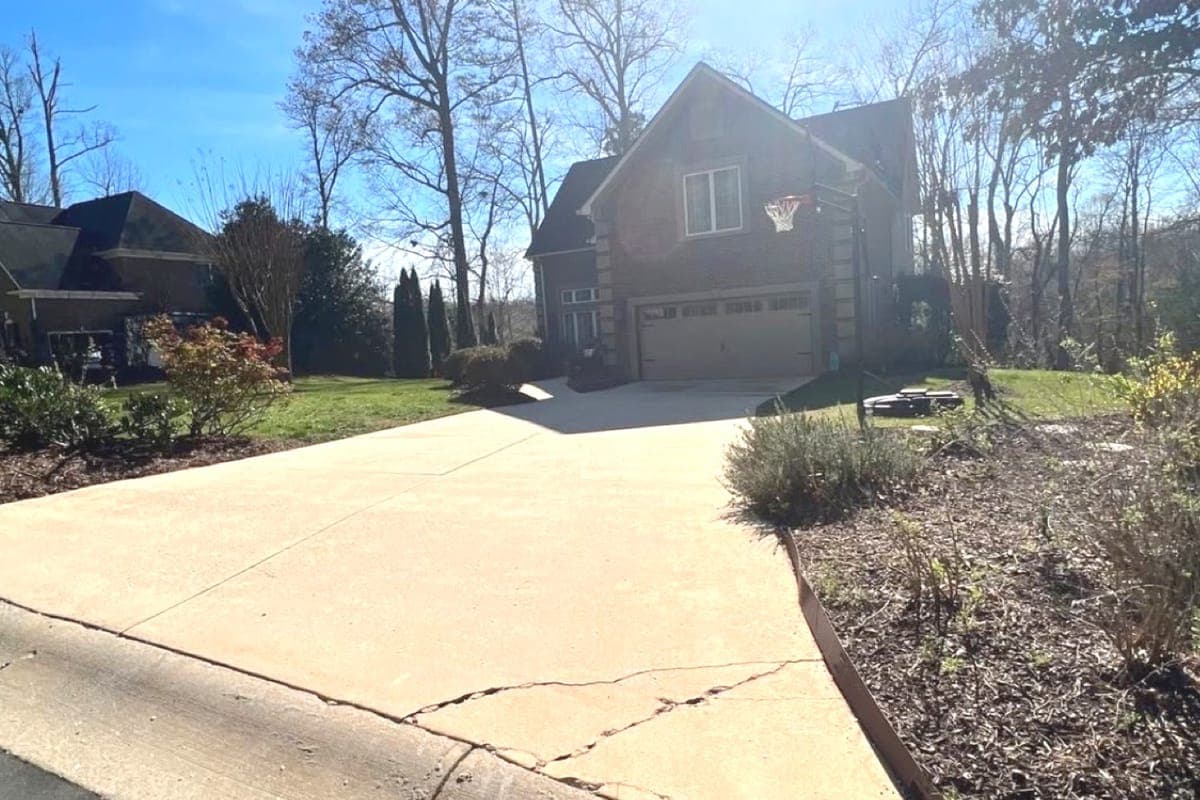
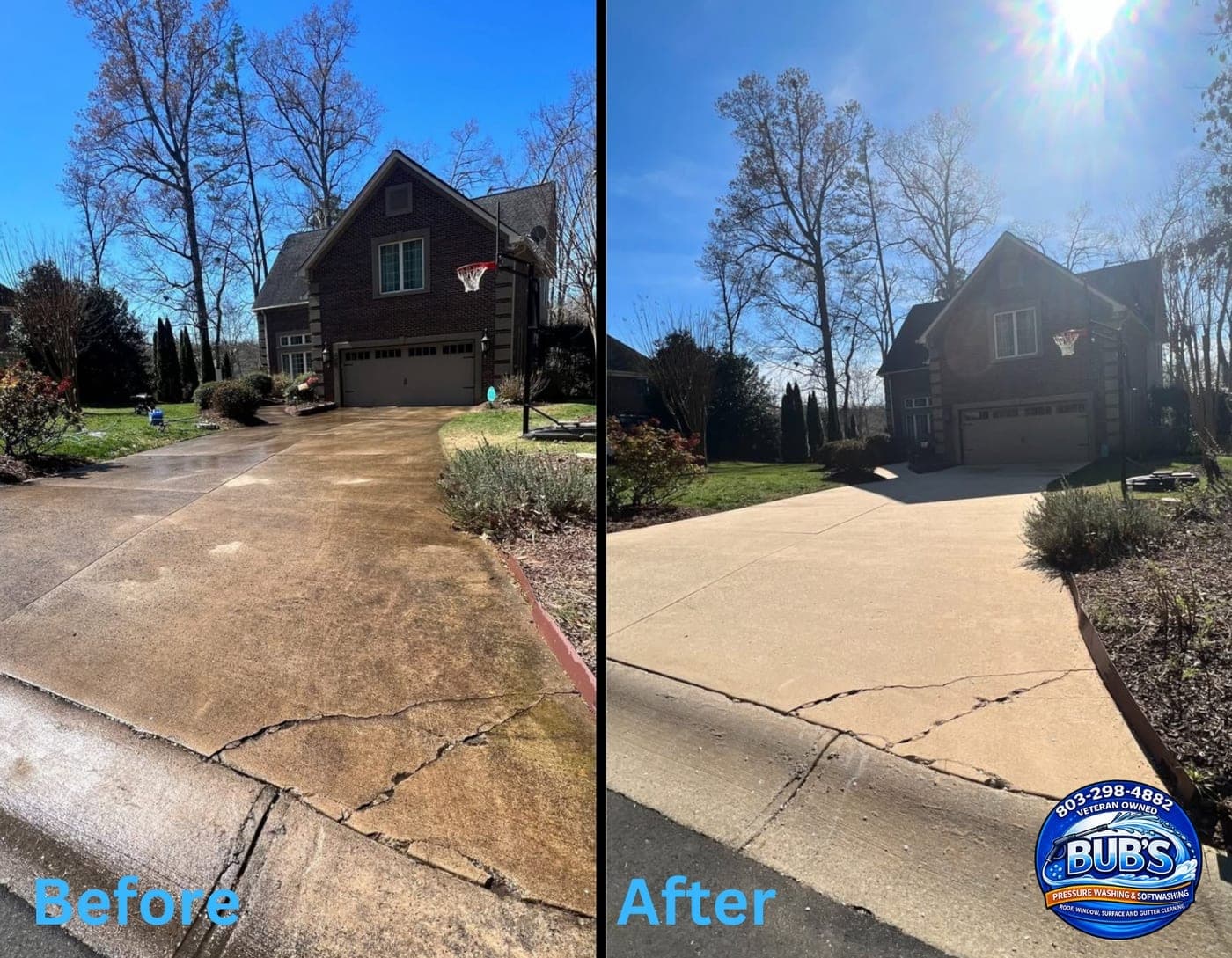
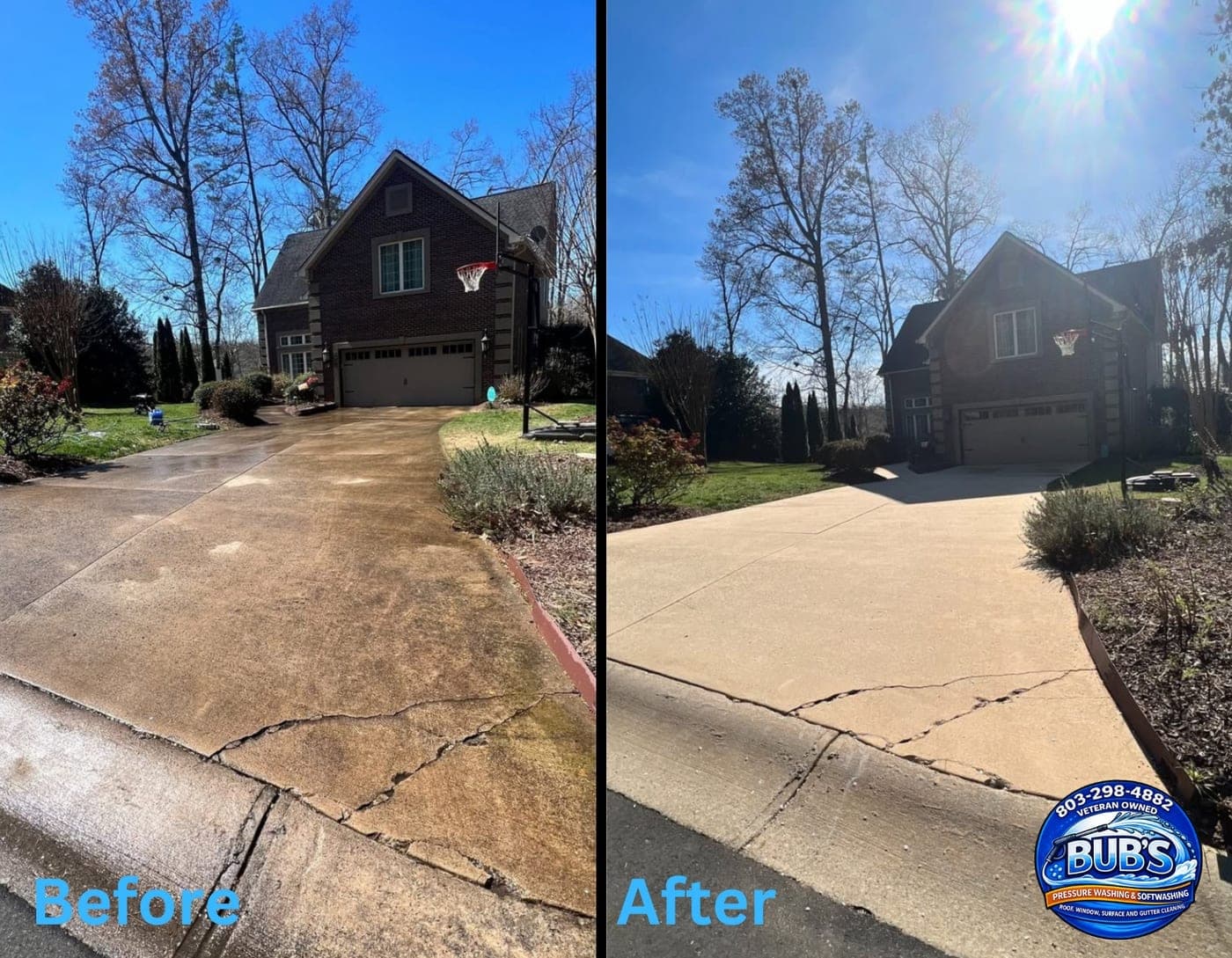
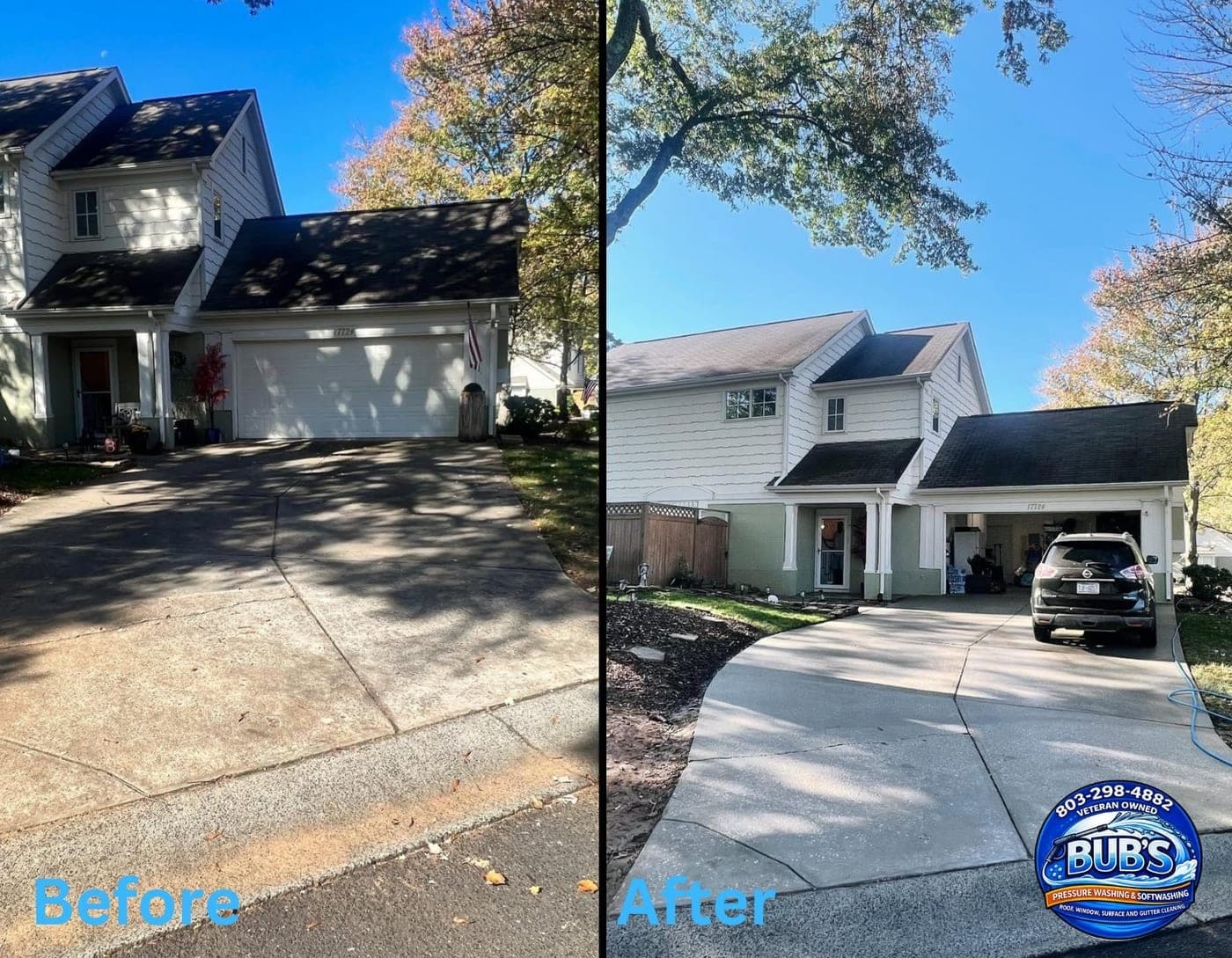
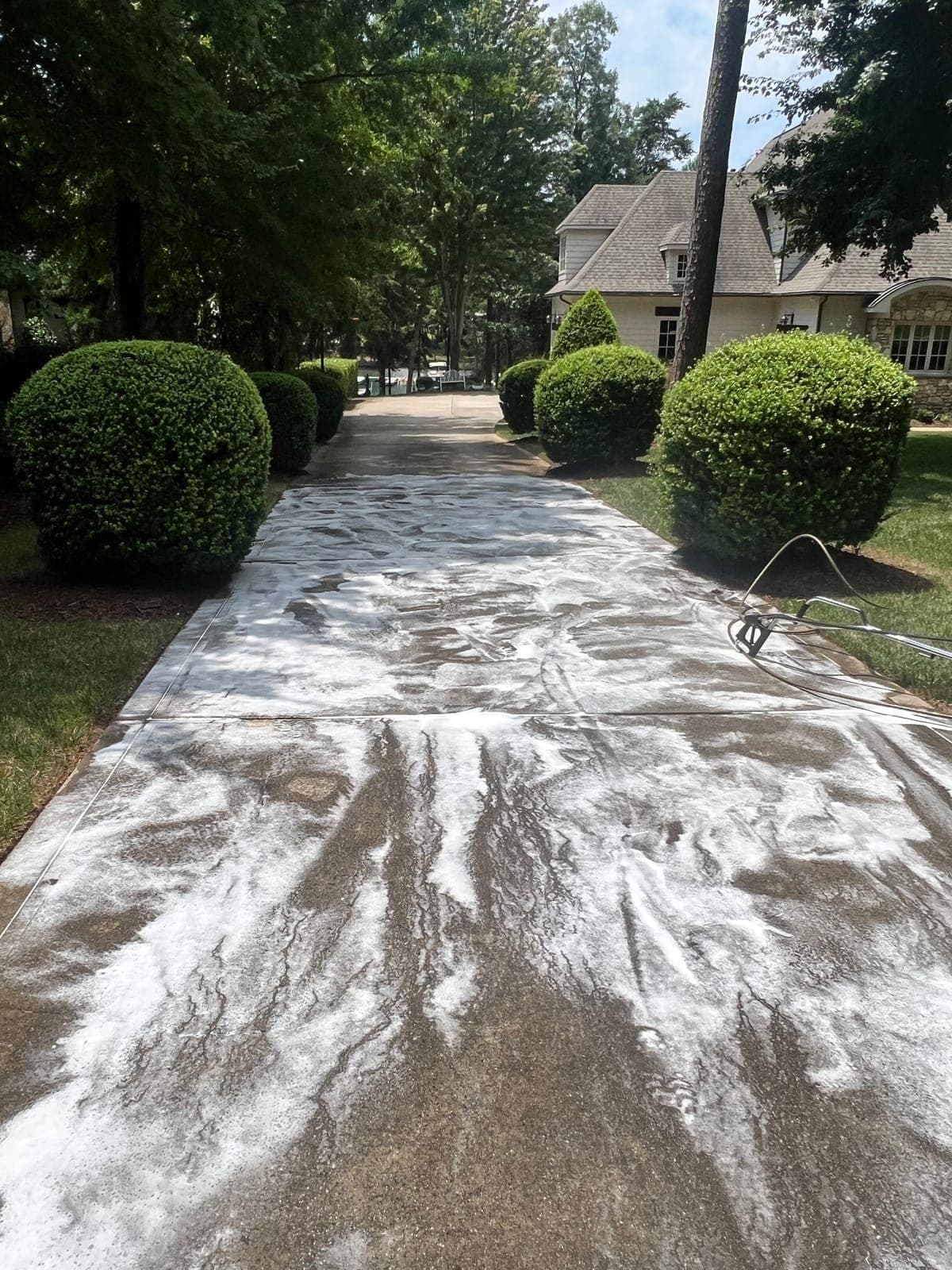
Out here a driveway is usually a long run, from the road clear back to the house on the wooded acreage and horse farms. Along the way it's also the barn pad, the apron where the trailer and mower live, and the stretch where gravel ties into poured concrete. All of it stains differently. The concrete near the barn picks up grease and tire scuff. The long run back to the house grows a film down the shaded edge. The apron at the road catches the orange red-clay wash off the unpaved shoulder. A bare wand on a run that long leaves stripes you'll see from the porch, and a hard pass on the fresher pours can score concrete that hasn't finished hardening. So the work goes in zones and stays gentle. The solution kills the green in the pores, a steady overlapping pass brings the whole length to one tone, and the gravel-to-concrete seam gets feathered so there's no hard line. A straight word before we begin. The orange the red clay drags over a slab is iron, and an oil drip where the truck sits is petroleum. Neither is growth, and each carries its own treatment we'll walk you through first.
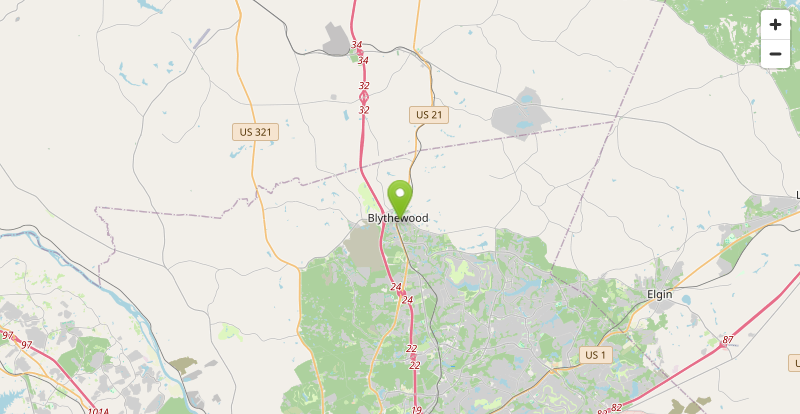
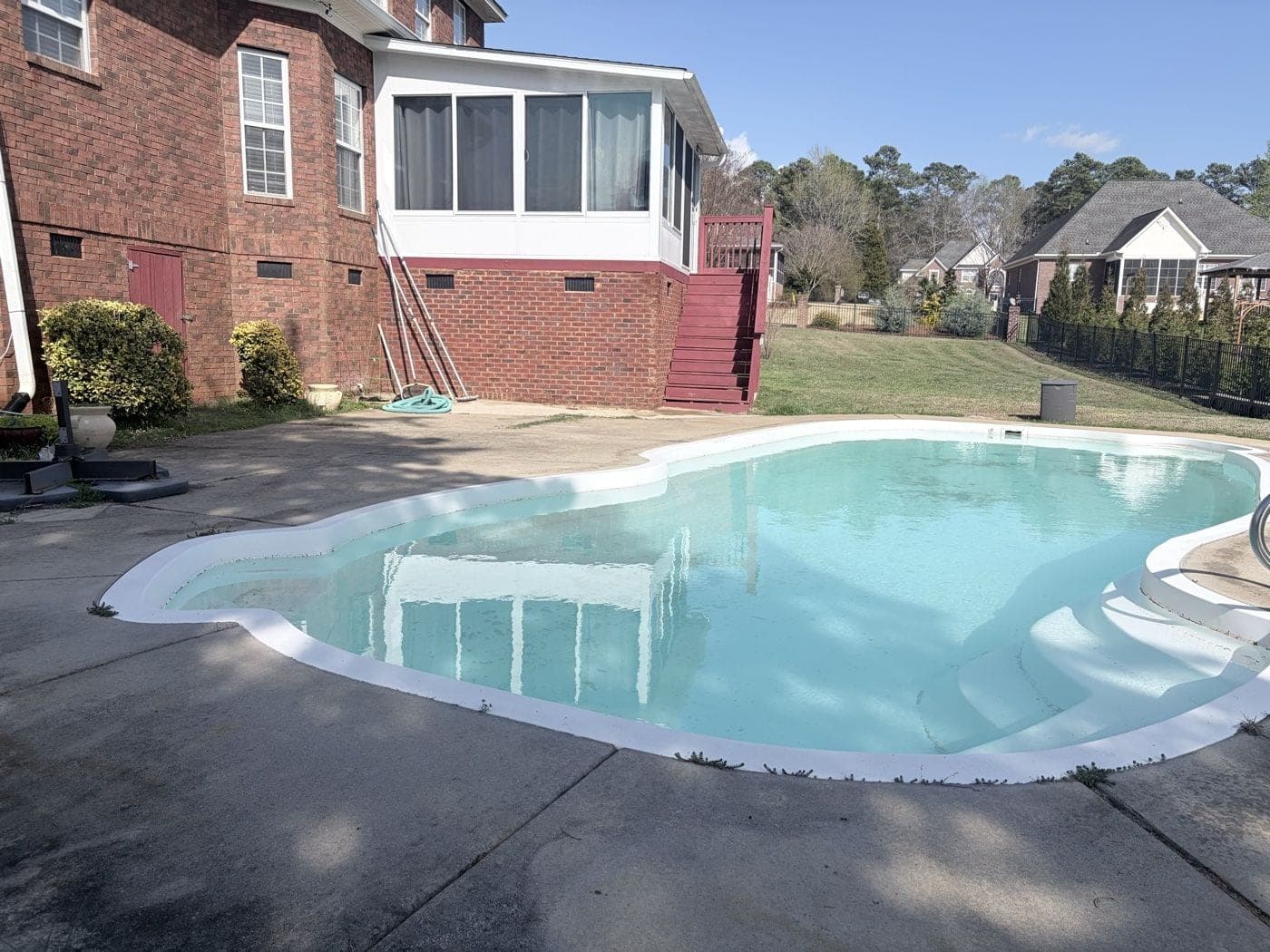
Blythewood sits about twenty minutes up I-77 from Columbia, in what locals still call Doko after the old railroad watering stop. Most of the town is new: more than seven in ten homes here have gone up since 2000, big four- and five-bedroom places in gated golf communities like Cobblestone Park and Longcreek Plantation, alongside the horse farms and wooded acreage that give the area its character. That means a lot of newer vinyl, builder-grade brick, and fresh architectural-shingle roofs that do best with a gentle soft wash rather than high pressure. Even so, the Midlands humidity and the heavy pine canopy grow algae fast on the shaded north sides, the long privacy fences, and the pool decks, and the iron-rich red clay leaves a rusty tint on driveways and walkways that a garden hose won't budge.
We bring our driveway cleaning to Barony Place, Crickentree, and Lake Carolina and the rest of Blythewood, with the same crew and the same care.